

Please remember to subscribe to my Substack to receive this free daily commentary—which I work very hard to produce—directly in your inbox.

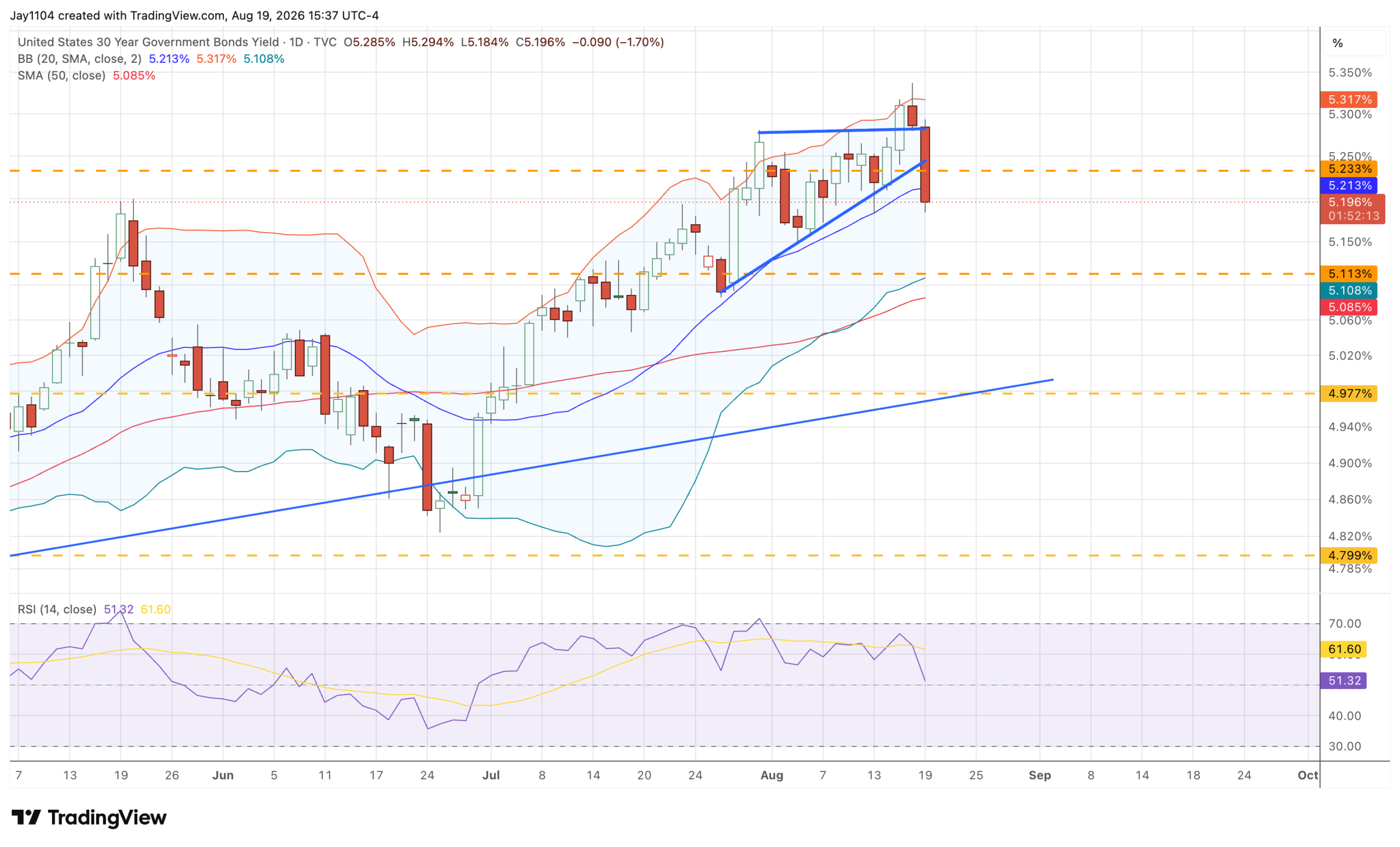
Rates fell sharply on the day after the Treasury said it would double the size of its bond purchases to $4 billion from $2 billion for 10-, 20-, and 30-year Treasuries. The bond purchases send a pretty clear signal that things in the off-the-run market were very illiquid and that we were likely seeing bid-ask spreads widen. Off-the-run Treasuries are anything that is not the most current issue, and they tend to have lower liquidity and trading volume to start with.
It could be due to the absence of buyers for those issues; it is hard for me to say. But clearly, for the Treasury to do this just two weeks after the quarterly refunding announcement would suggest to me that something changed materially over that time, and the sell-off in the rates may be a bit of a liquidity issue.
Is the sell-off in bonds over? Probably not. Could the 30-year yield fall to 5.1% in the interim? Sure. It is also not QE in any way, shape, or form. The Treasury will have to issue debt at the front of the curve to finance the purchases on the back of the curve.
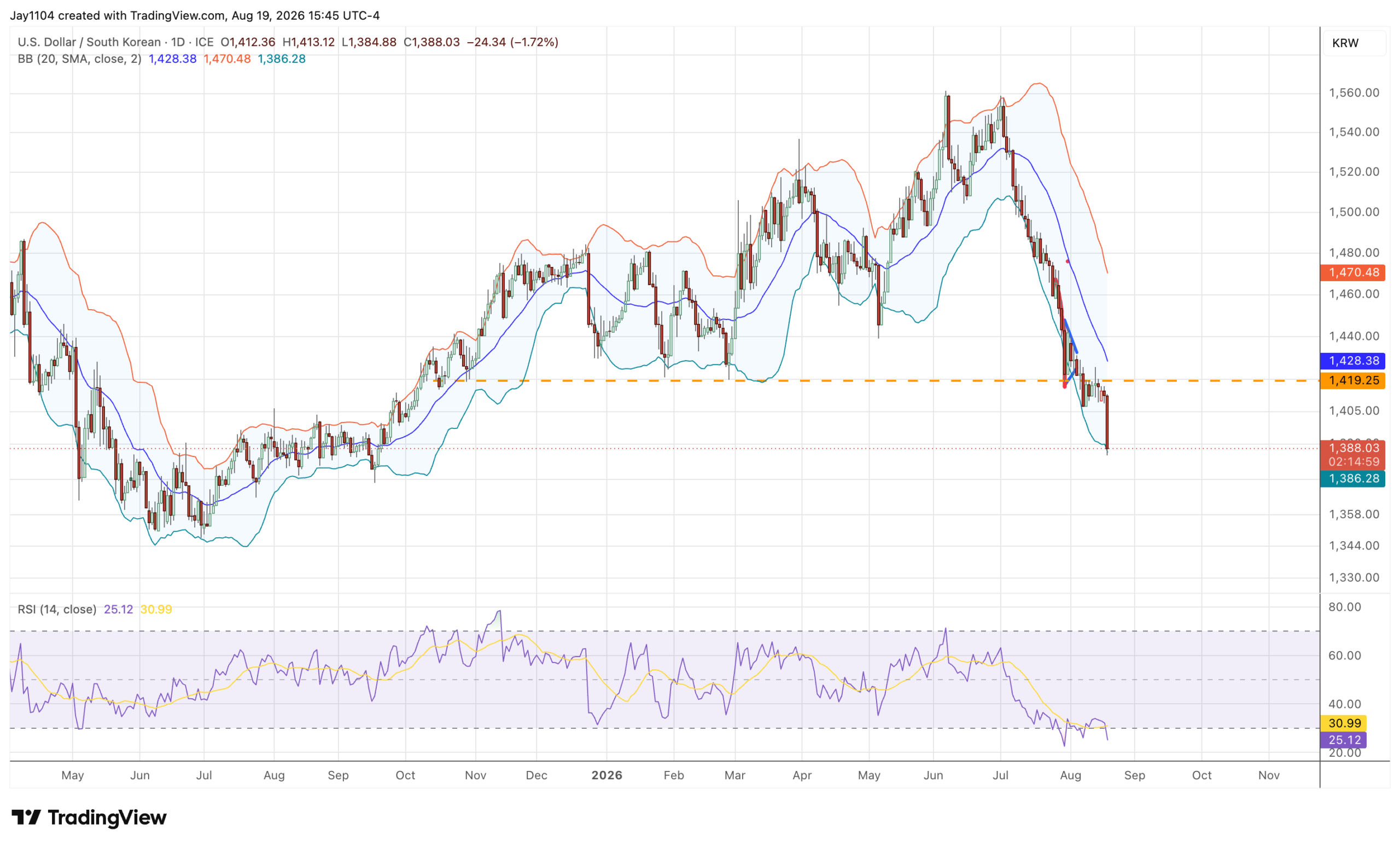
The dollar did not respond well to today’s news, and the KRW was already stronger on the day. Following the news, that strength only grew, with the USD/KRW dropping by 1.7% on the day. It is clearly oversold, trading below its lower Bollinger Band and with an RSI below 30. So I would think it either bounces back to the 20-day moving average or consolidates sideways.
This is probably not good for either the KOSPI or the AI trade in general.
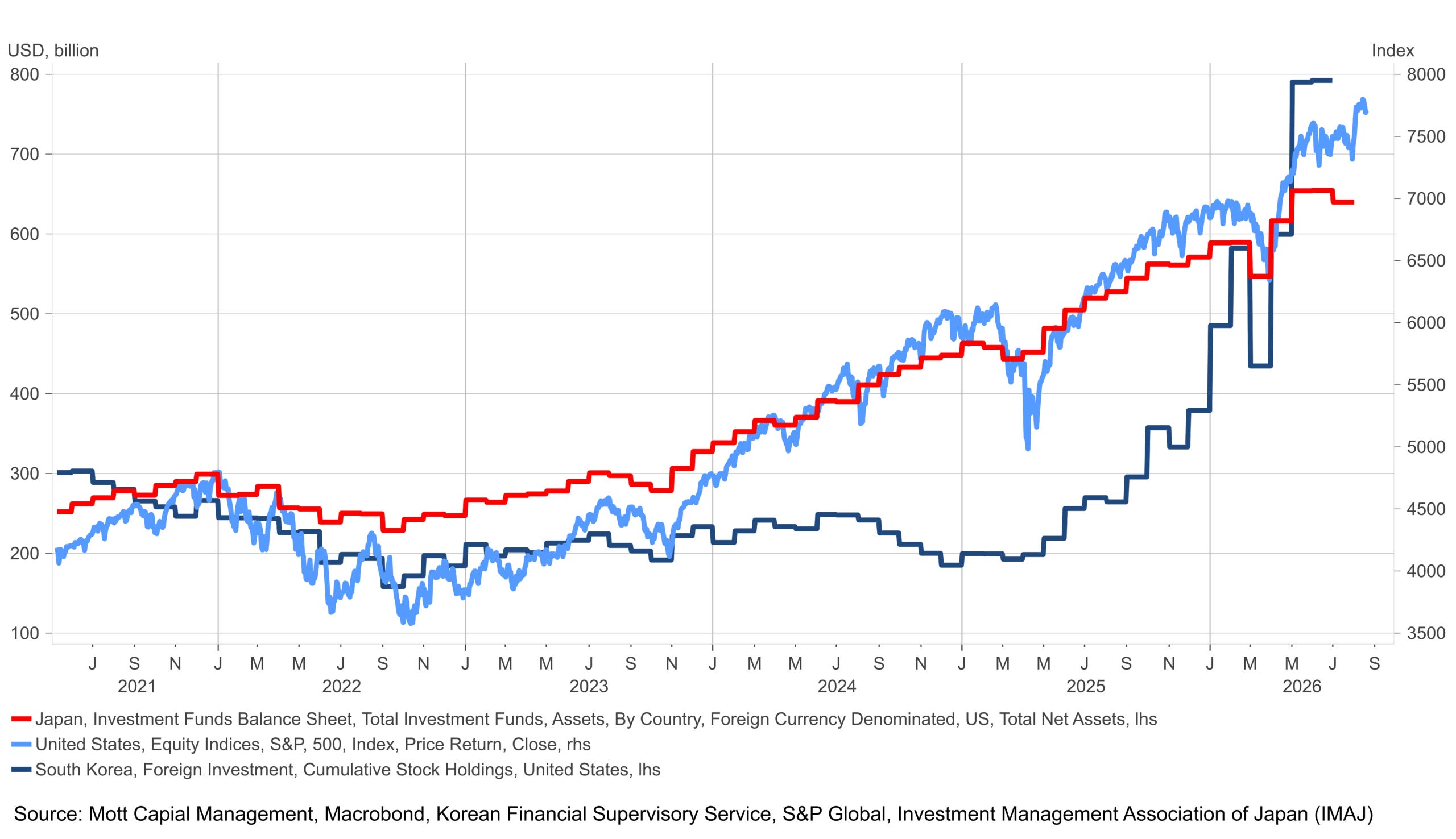
A tremendous amount of money from Korea has been put into the market since the April 2025 sell-off, and the stronger KRW is likely a reflection of outflows from US-dollar assets back into Korea.
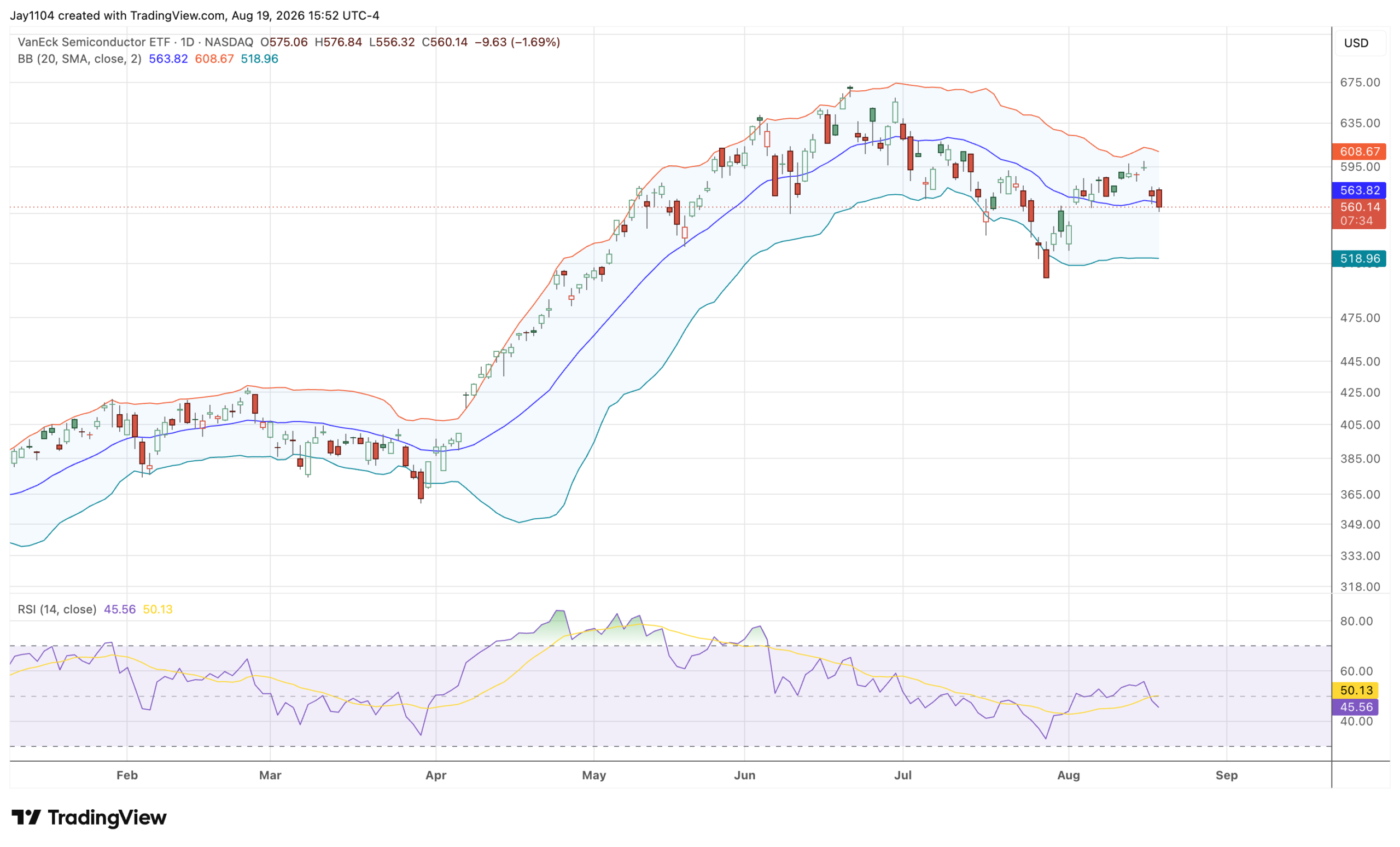
The S&P 500 was largely supported by options positioning today, which was really no different from yesterday. The same can be said of the SMH, with the put wall at $560 holding.
But the issue for the SMH is all the open call positions at higher prices, particularly around $600, that will start to melt if the SMH can’t begin to climb. Once the put wall at $560 is chewed up, we could see the SMH decline much more sharply, especially if the strong won reflects Korean liquidity leaving U.S. markets.
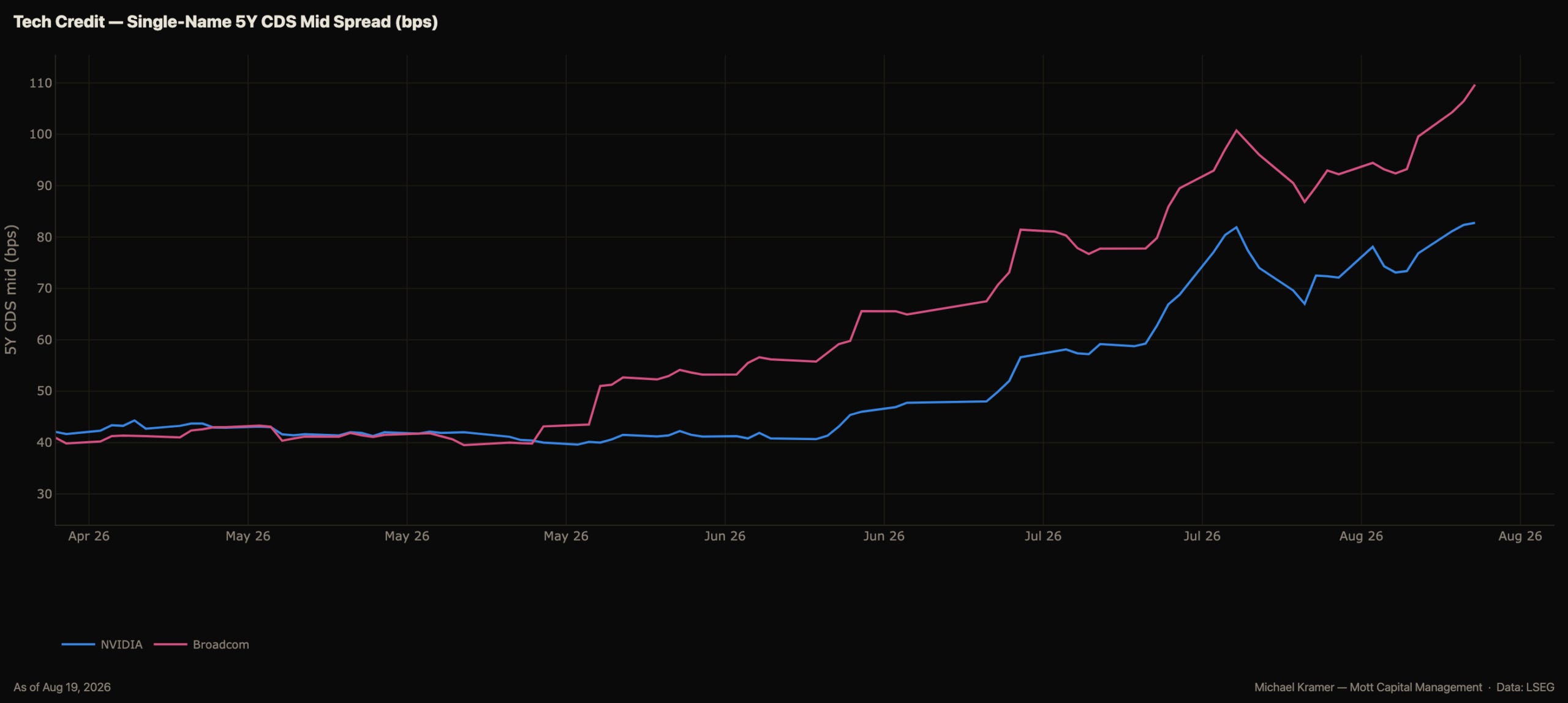
Finally, credit spreads continued to widen for Broadcom and Nvidia. When combined with the whole KRW situation, it just continues to suggest to me that the semis are vulnerable to a steeper pullback.
-Mike
Glossary by ChatGPT
20-day moving average — The average closing price of a security or exchange rate over the previous 20 trading sessions, commonly used to identify short-term trends.
Bollinger Band — A volatility indicator consisting of a moving average and upper and lower bands typically set a specified number of standard deviations away.
Call positions — Options positions that provide exposure to the right to buy an underlying asset at a specified strike price before or at expiration.
Credit spreads — The yield premium that corporate debt pays over comparable government debt, often used as a measure of perceived credit risk.
Front of the curve — The short-maturity portion of the Treasury yield curve.
Off-the-run Treasuries — Previously issued Treasury securities that have been replaced by newer benchmark issues of the same maturity.
Open call positions — Outstanding call option contracts that remain active and have not been closed, exercised, or expired.
Put wall — A strike price with substantial put-option positioning that can influence dealer hedging flows and the underlying asset’s price behavior.
Quarterly refunding announcement — The U.S. Treasury’s regular announcement detailing its borrowing plans and expected issuance of longer-term Treasury securities.
QE — Quantitative easing, a monetary policy in which a central bank purchases securities to increase liquidity and ease financial conditions.
RSI — Relative Strength Index, a momentum oscillator ranging from 0 to 100, with readings below 30 commonly interpreted as oversold.
USD/KRW — The exchange rate measuring the number of South Korean won required to purchase one U.S. dollar.
Disclosure
This report contains independent commentary to be used for informational and educational purposes only. Michael Kramer is a member and investment adviser representative with Mott Capital Management. Mr. Kramer is not affiliated with this company and does not serve on the board of any related company that issued this stock. All opinions and analyses presented by Michael Kramer in this analysis or market report are solely Michael Kramer’s views. Readers should not treat any opinion, viewpoint, or prediction expressed by Michael Kramer as a specific solicitation or recommendation to buy or sell a particular security or follow a particular strategy. Michael Kramer’s analyses are based upon information and independent research that he considers reliable, but neither Michael Kramer nor Mott Capital Management guarantees its completeness or accuracy, and it should not be relied upon as such. Michael Kramer is not under any obligation to update or correct any information presented in his analyses. Mr. Kramer’s statements, guidance, and opinions are subject to change without notice. Past performance is not indicative of future results. Neither Michael Kramer nor Mott Capital Management guarantees any specific outcome or profit. You should be aware of the real risk of loss in following any strategy or investment commentary presented in this analysis. Strategies or investments discussed may fluctuate in price or value. Investments or strategies mentioned in this analysis may not be suitable for you. This material does not consider your particular investment objectives, financial situation, or needs and is not intended as a recommendation appropriate for you. You must make an independent decision regarding investments or strategies in this analysis. Upon request, the advisor will provide a list of all recommendations made during the past twelve months. Before acting on information in this analysis, you should consider whether it is suitable for your circumstances and strongly consider seeking advice from your own financial or investment adviser to determine the suitability of any investment.