
Stocks Rise, Oil Falls, And Inflation May Still Be A Problem

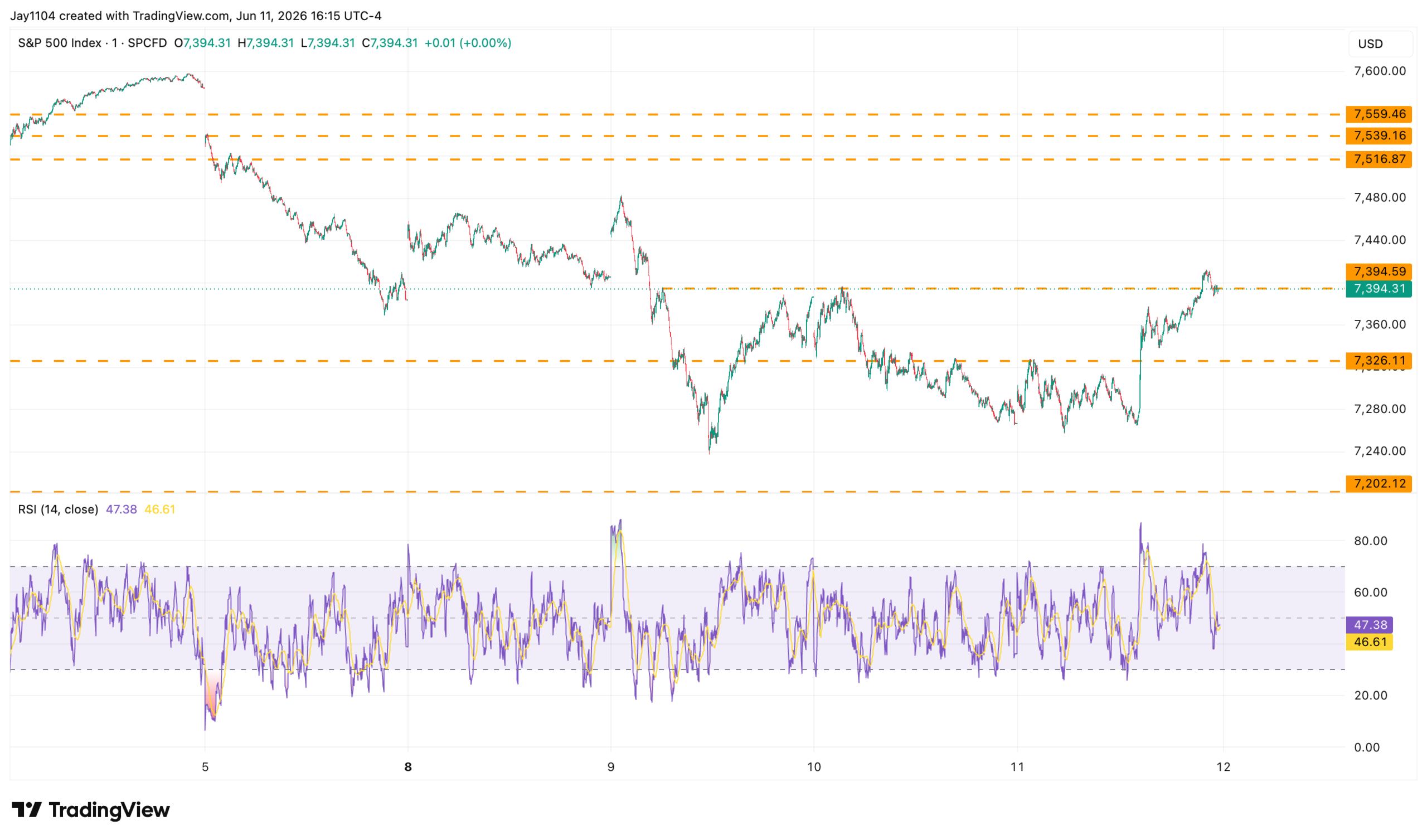
Stocks finished the day higher following some late-breaking news on the Middle East conflict. Headlines come and go, and whether this latest development has any lasting impact remains to be seen.
The most notable aspect of today’s rally is that it effectively took the S&P 500 back to yesterday’s highs, where it ultimately closed.
One could easily argue that because the market largely looked through the war the entire time, there is little reason for stocks to rally on this news. If the market had already priced in the conflict and its potential outcomes, then today’s move may simply reflect a shift in positioning rather than any meaningful change in fundamentals.
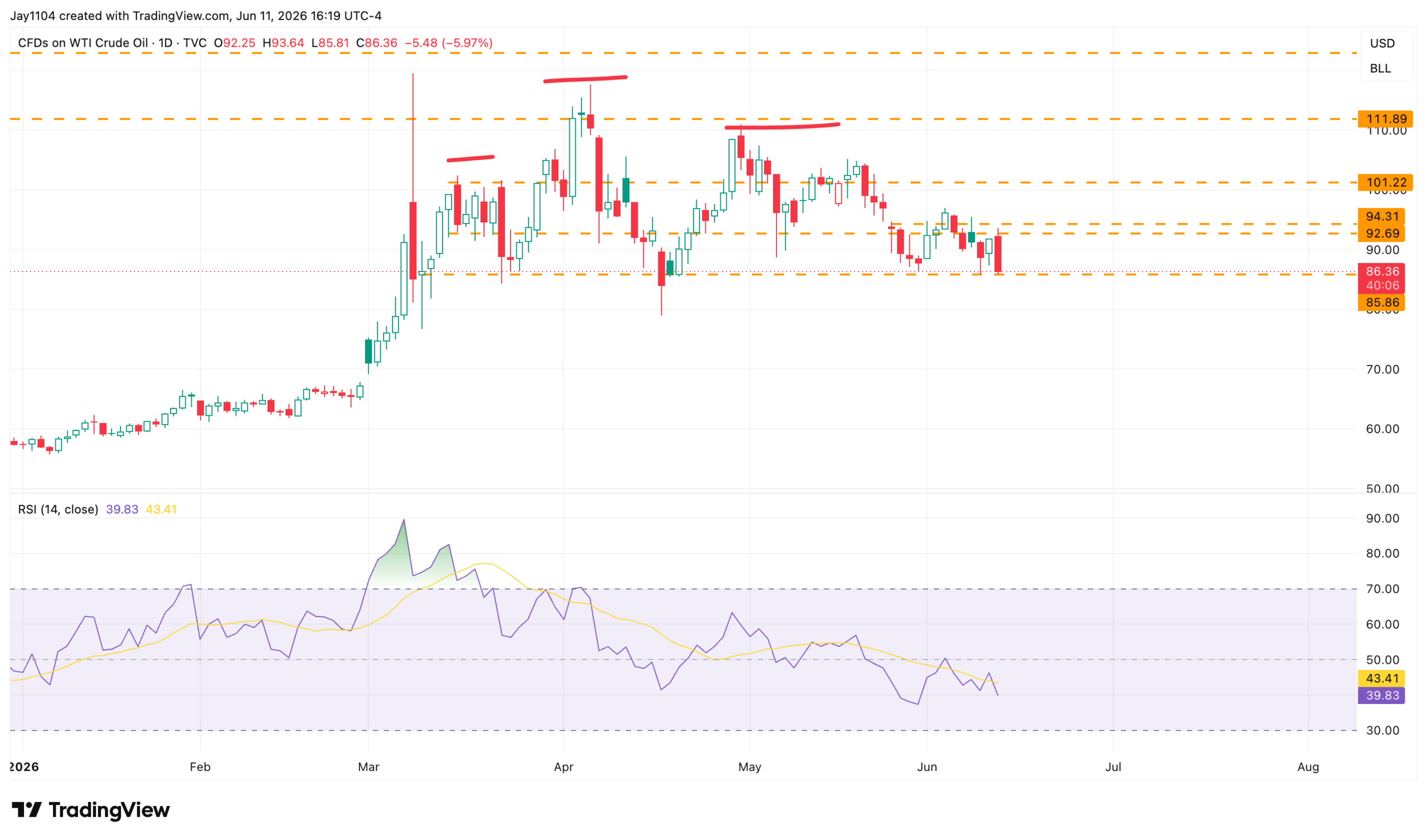
Oil also fell on the day, dropping back to support around $86 in WTI. That support level has been tested numerous times and continues to hold. Perhaps there is a fundamental reason for that, or perhaps there is not. Either way, that has been the pattern for quite some time now.
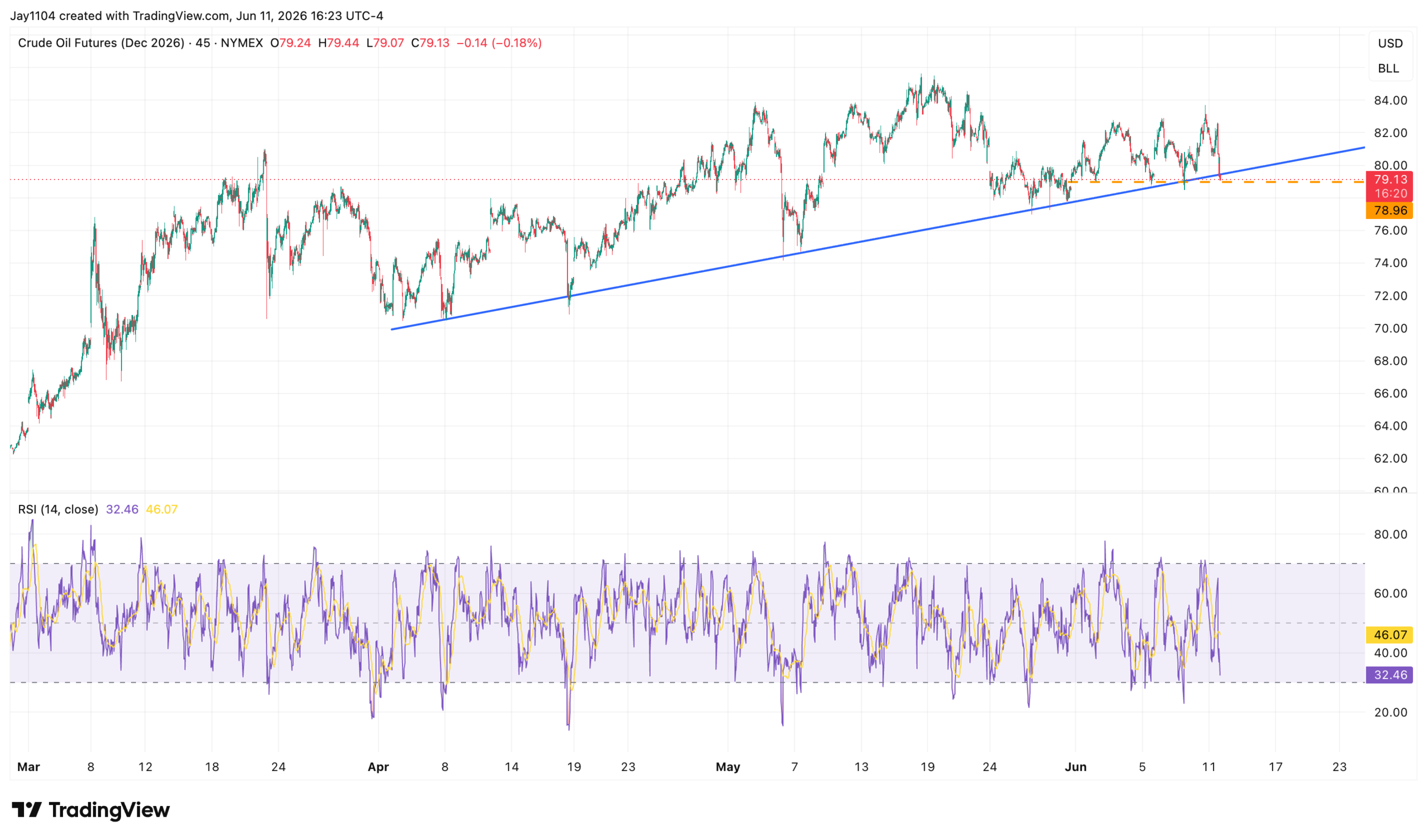
Perhaps more importantly, December WTI continues to trade around $80 and was down on the day, but not by as much as the front-month contracts. This suggests that while near-term supply concerns may be easing, the market continues to price in relatively elevated oil prices further out on the curve.
Meanwhile, gasoline prices barely fell.
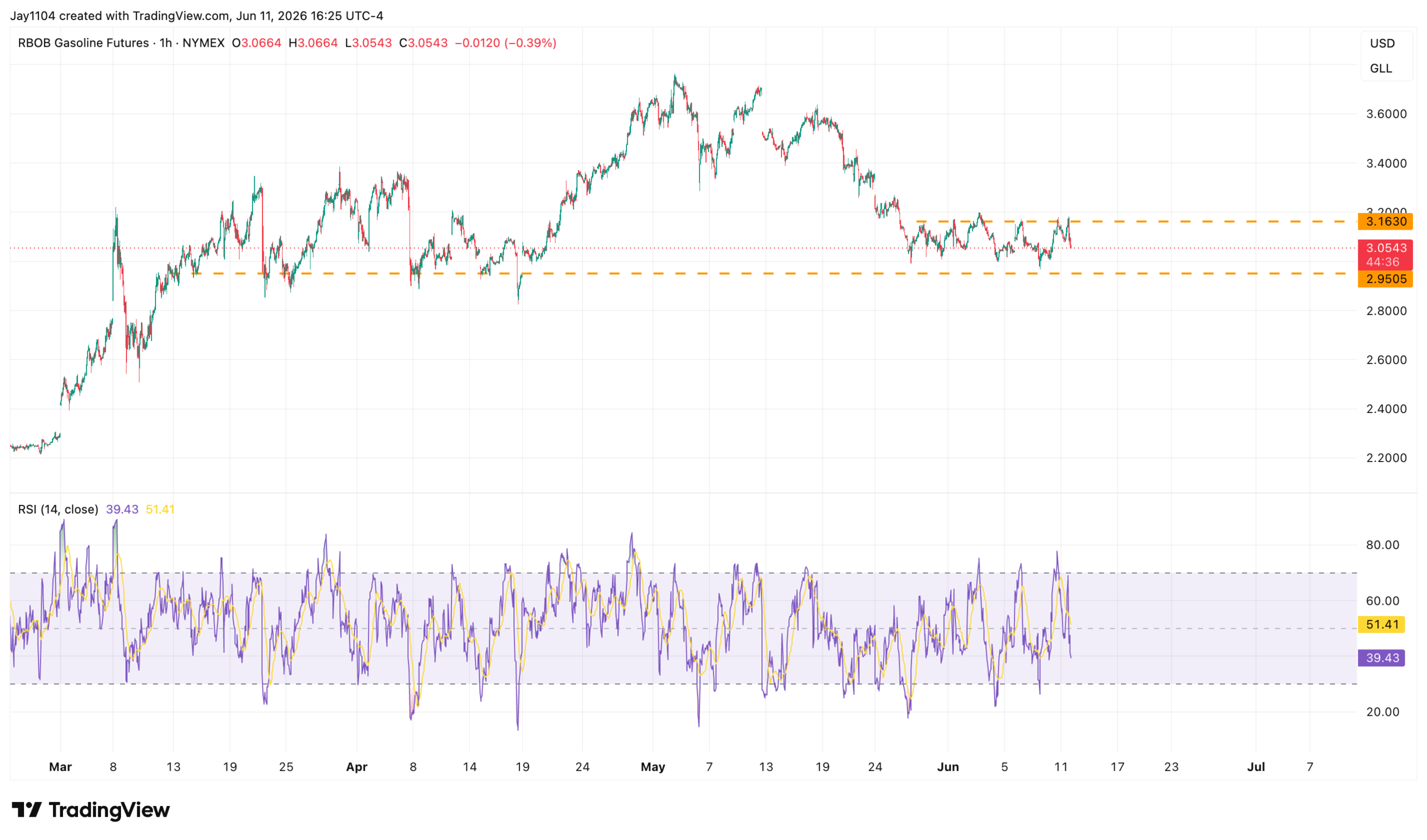
Oil and gasoline prices remain choppy, with neither breaking support nor resistance in any meaningful way. That suggests that even if the war is over and the Strait reopens, oil may still be priced at a higher overall price level.
To achieve the disinflation needed to bring CPI all the way back down below 3%, oil and gasoline prices will need to fall. Otherwise, month-over-month inflation rates may slow, but the year-over-year rate of change will likely remain above 3% through the end of 2026 due to base effects.
The Fed probably does not need to raise rates, but I think it would be hard for them to cut rates.
Something to think about.
-Mike
Glossary by ChatGPT
Base Effects — The impact that prior-year price levels have on current year-over-year inflation calculations.
CPI (Consumer Price Index) — A measure of inflation that tracks changes in the prices consumers pay for a basket of goods and services.
December WTI — A futures contract for West Texas Intermediate crude oil with delivery scheduled for December.
Disinflation — A slowdown in the rate of inflation, where prices continue to rise but at a slower pace.
Federal Reserve (Fed) — The central bank of the United States responsible for monetary policy and financial stability.
Front-Month Contract — The futures contract nearest to expiration and typically the most actively traded.
Fundamentals — The underlying economic, financial, or business factors that influence an asset’s value.
Month-over-Month Inflation — The percentage change in inflation from one month to the next.
Positioning — The aggregate investment exposure held by market participants in a particular asset or market.
Resistance — A price level where selling pressure has historically been strong enough to limit further gains.
S&P 500 — A broad U.S. stock market index tracking 500 large publicly traded companies.
Strait — In this context, a critical maritime passage whose accessibility can influence global energy supply and pricing.
Support — A price level where buying interest has historically been sufficient to prevent further declines.
WTI (West Texas Intermediate) — A benchmark grade of U.S. crude oil commonly used in energy markets.
Year-over-Year Inflation — The percentage change in prices compared with the same period one year earlier.
Disclosure
This report contains independent commentary to be used for informational and educational purposes only. Michael Kramer is a member and investment adviser representative with Mott Capital Management. Mr. Kramer is not affiliated with this company and does not serve on the board of any related company that issued this stock. All opinions and analyses presented by Michael Kramer in this analysis or market report are solely Michael Kramer’s views. Readers should not treat any opinion, viewpoint, or prediction expressed by Michael Kramer as a specific solicitation or recommendation to buy or sell a particular security or follow a particular strategy. Michael Kramer’s analyses are based upon information and independent research that he considers reliable, but neither Michael Kramer nor Mott Capital Management guarantees its completeness or accuracy, and it should not be relied upon as such. Michael Kramer is not under any obligation to update or correct any information presented in his analyses. Mr. Kramer’s statements, guidance, and opinions are subject to change without notice. Past performance is not indicative of future results. Neither Michael Kramer nor Mott Capital Management guarantees any specific outcome or profit. You should be aware of the real risk of loss in following any strategy or investment commentary presented in this analysis. Strategies or investments discussed may fluctuate in price or value. Investments or strategies mentioned in this analysis may not be suitable for you. This material does not consider your particular investment objectives, financial situation, or needs and is not intended as a recommendation appropriate for you. You must make an independent decision regarding investments or strategies in this analysis. Upon request, the advisor will provide a list of all recommendations made during the past twelve months. Before acting on information in this analysis, you should consider whether it is suitable for your circumstances and strongly consider seeking advice from your own financial or investment adviser to determine the suitability of any investment.