
S&P 500 and Nasdaq 100 Break Down as Dollar Strength Accelerates


Stocks fell sharply today, with the consolidation patterns noted yesterday in both the S&P 500 and the Nasdaq 100 breaking below the lower end of their recent trading ranges. Clearly, there will need to be follow-through to confirm the move. However, with Micron reporting earnings after the close tomorrow and the PCE report due on Thursday, I would not be surprised to see implied volatility continue to rise, and the indexes remain under pressure.
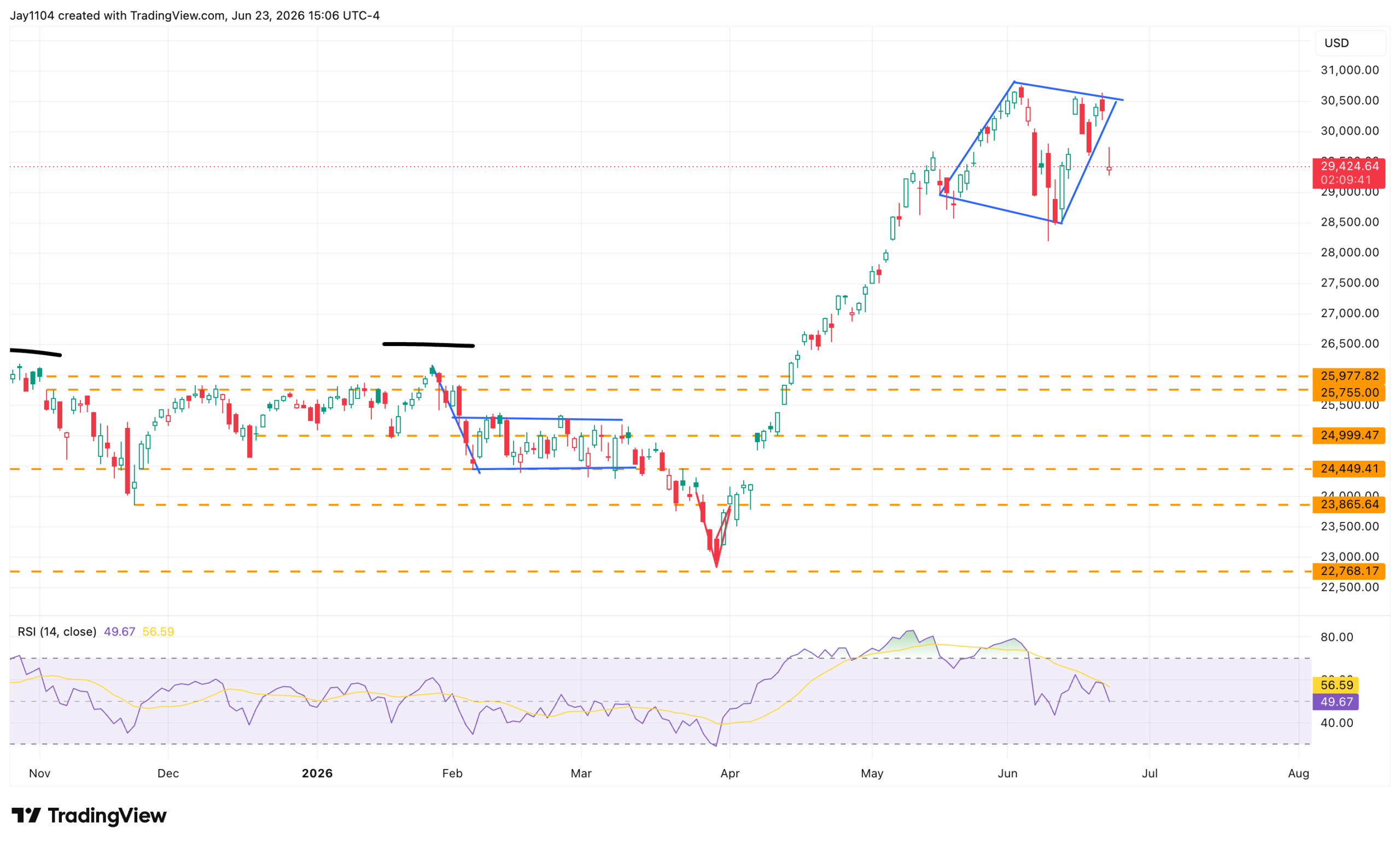
The same occurred in the Nasdaq 100, which also fell sharply on the day by more than 3% and broke out of its consolidation phase. Today’s move could very well be the start of something larger. The indices have been driven higher by an extraordinary rally in semiconductor stocks, which have powered much of the advance. We also know that a significant portion of the move was driven by options flows, and who knows what role leveraged products may have played.
The point is that the index can fall sharply if the stocks that drove it higher begin to fall sharply. And there is no way of knowing how far those stocks could decline because nobody really knows what they are worth. In fact, when someone argues that Micron trades on a low P/E ratio, that is usually the first warning sign that they do not really understand the stock or the sector.
In theory, I do know what these patterns suggest could happen based on historical precedents and my own experience. But in reality, it is a thankless exercise: if I am right, I get no credit; if I am wrong, I get all the blame. So I am going to pass on that one. You can thank everyone who came before you for that.
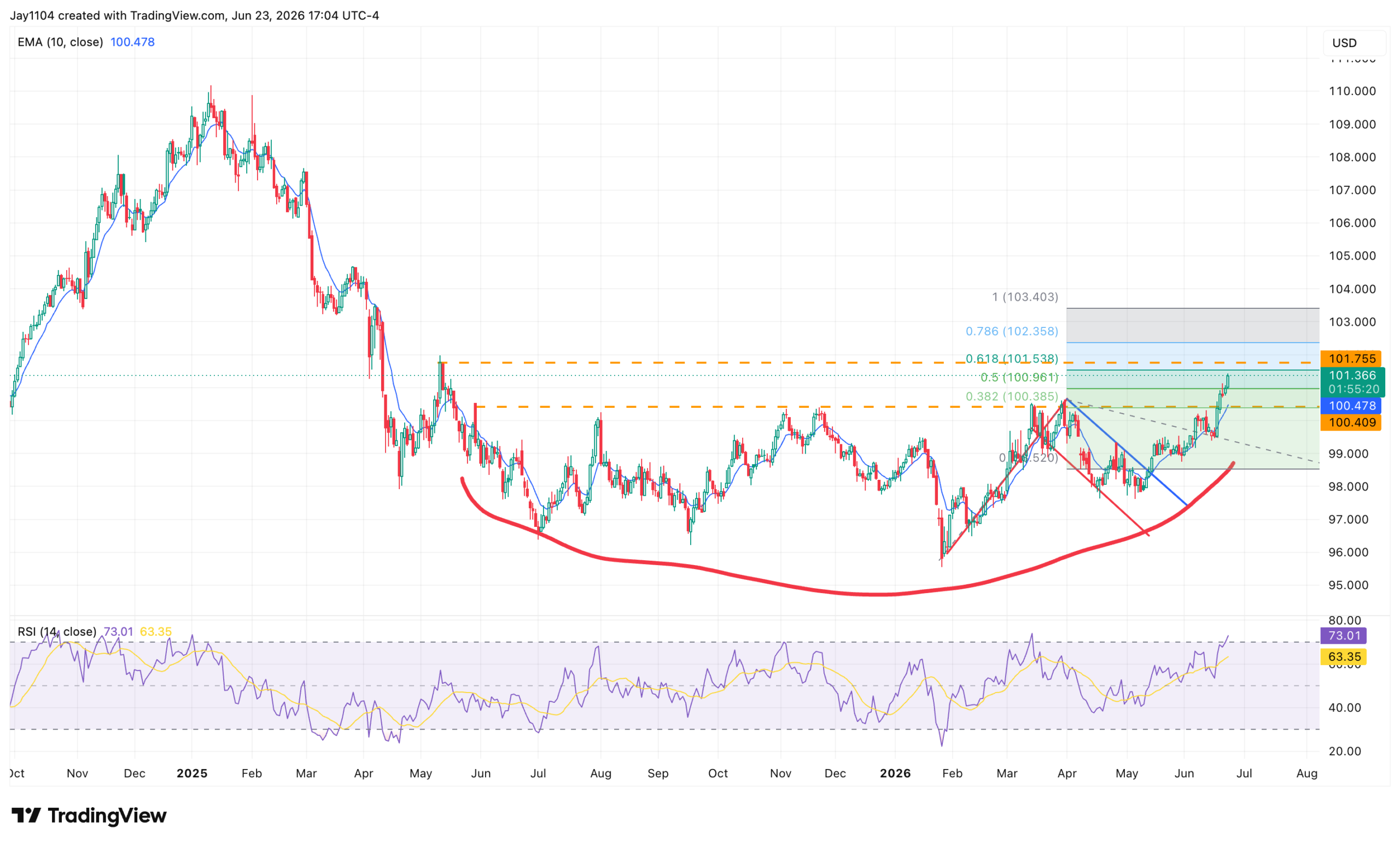
Meanwhile, the dollar continues to show strength and has now easily cleared resistance. The only question that remains is whether the dollar can break above 101.75. If that happens, there is room for it to move higher against the euro, pound, and yen.
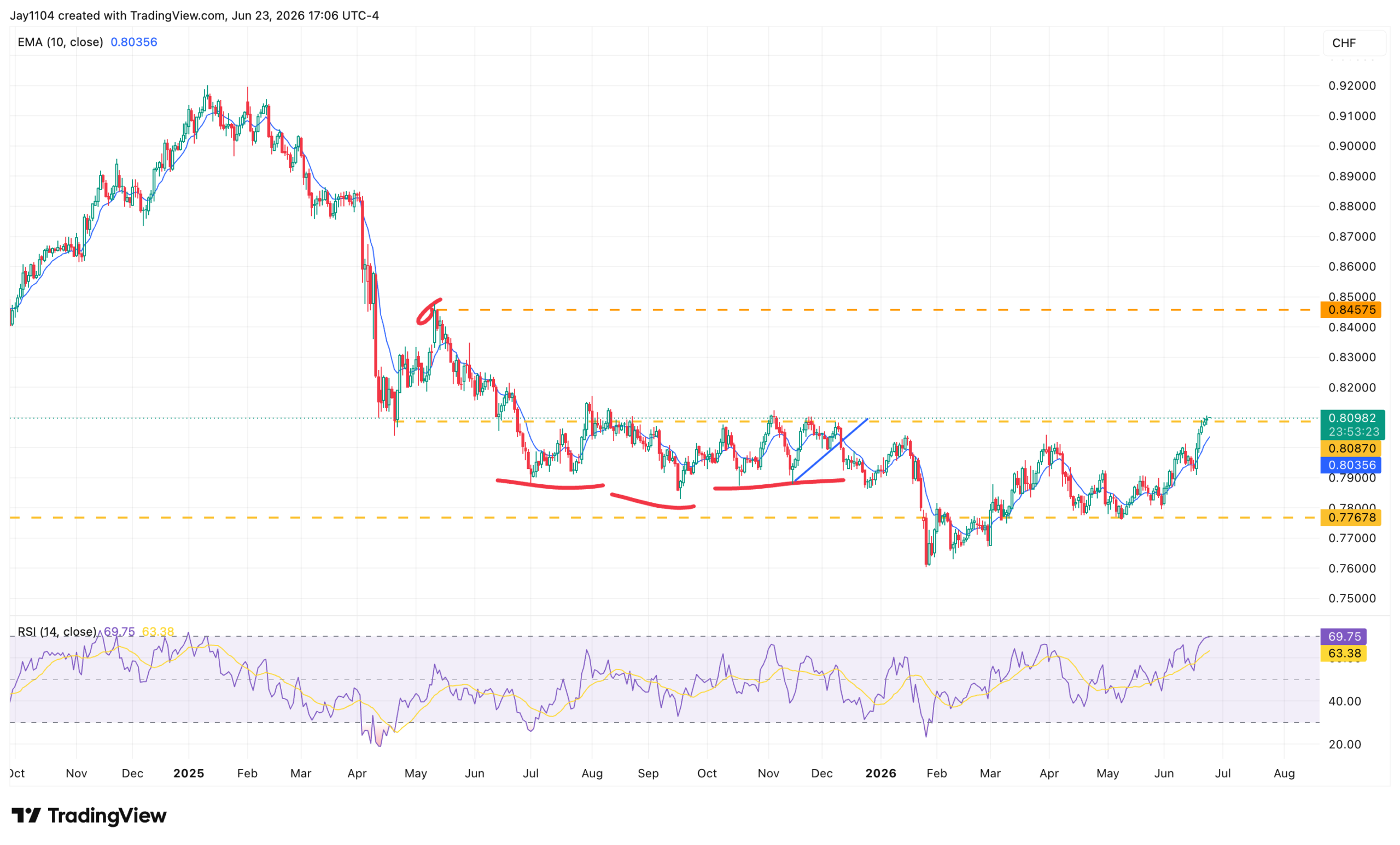
The Swiss franc is another good example, with USD/CHF pushing up against 0.81. A breakout above that level would likely lead to further dollar strength, potentially carrying USD/CHF all the way to 0.847.
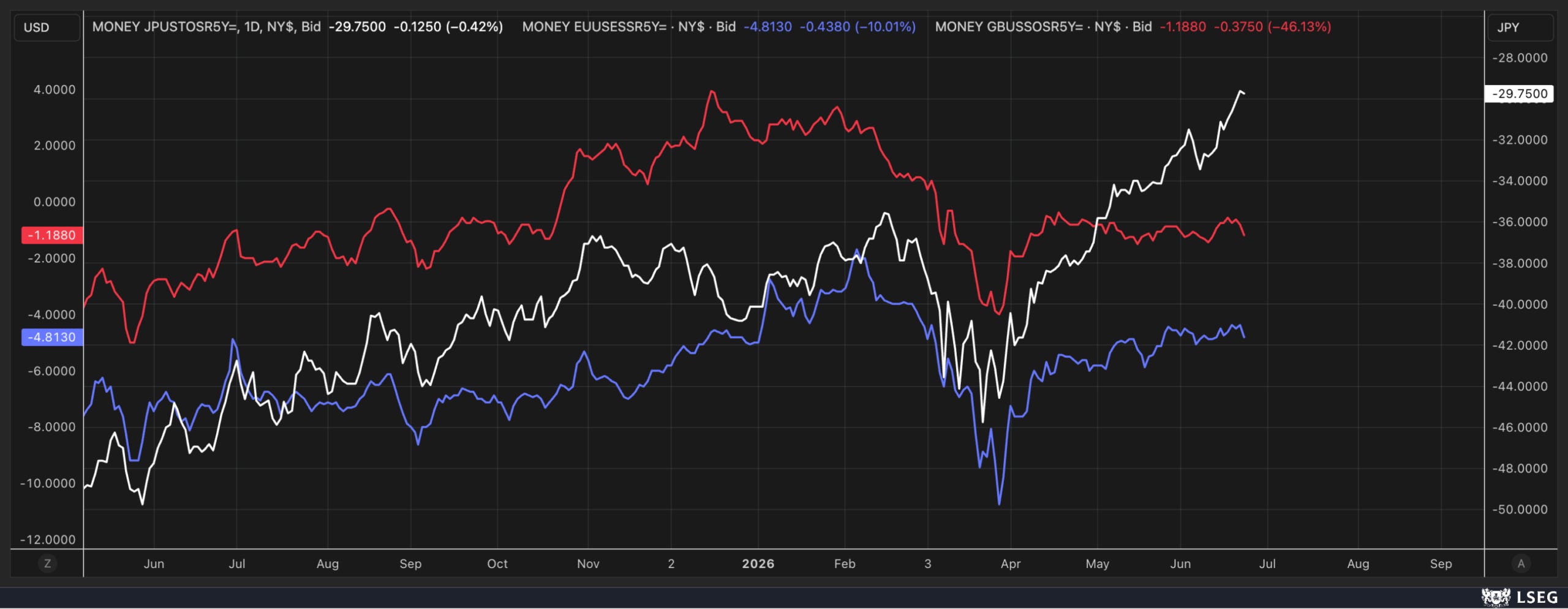
I know that a stronger dollar is supposed to tighten financial conditions, but so far we haven’t really seen that happen. To this point, cross-currency basis swaps have shown very little tightening, suggesting there has not been a meaningful increase in demand for dollar hedges despite the dollar’s strength.
-Mike
Glossary by ChatGPT
Consolidation Pattern — A period in which an asset trades within a defined range before potentially breaking higher or lower.
Cross-Currency Basis Swap — A derivative contract used to exchange funding in different currencies and measure demand for currency hedging.
Financial Conditions — A broad measure of the ease or difficulty of obtaining financing, influenced by rates, credit spreads, currencies, and asset prices.
Implied Volatility — The market’s forecast of future price fluctuations derived from option prices.
Leveraged Products — Financial instruments designed to amplify the returns of an underlying asset, often using derivatives or borrowed capital.
Nasdaq 100 — A stock market index composed of 100 of the largest non-financial companies listed on the Nasdaq exchange.
Options Flows — Trading activity in options markets that can influence the price movement of underlying securities.
PCE (Personal Consumption Expenditures) Price Index — A key U.S. inflation measure closely monitored by policymakers and financial markets.
P/E Ratio (Price-to-Earnings Ratio) — A valuation metric comparing a company’s stock price to its earnings per share.
Resistance — A price level where selling pressure has historically been strong enough to limit further gains.
USD/CHF — The exchange rate measuring the value of the U.S. dollar relative to the Swiss franc.
Disclosure
This report contains independent commentary to be used for informational and educational purposes only. Michael Kramer is a member and investment adviser representative with Mott Capital Management. Mr. Kramer is not affiliated with this company and does not serve on the board of any related company that issued this stock. All opinions and analyses presented by Michael Kramer in this analysis or market report are solely Michael Kramer’s views. Readers should not treat any opinion, viewpoint, or prediction expressed by Michael Kramer as a specific solicitation or recommendation to buy or sell a particular security or follow a particular strategy. Michael Kramer’s analyses are based upon information and independent research that he considers reliable, but neither Michael Kramer nor Mott Capital Management guarantees its completeness or accuracy, and it should not be relied upon as such. Michael Kramer is not under any obligation to update or correct any information presented in his analyses. Mr. Kramer’s statements, guidance, and opinions are subject to change without notice. Past performance is not indicative of future results. Neither Michael Kramer nor Mott Capital Management guarantees any specific outcome or profit. You should be aware of the real risk of loss in following any strategy or investment commentary presented in this analysis. Strategies or investments discussed may fluctuate in price or value. Investments or strategies mentioned in this analysis may not be suitable for you. This material does not consider your particular investment objectives, financial situation, or needs and is not intended as a recommendation appropriate for you. You must make an independent decision regarding investments or strategies in this analysis. Upon request, the advisor will provide a list of all recommendations made during the past twelve months. Before acting on information in this analysis, you should consider whether it is suitable for your circumstances and strongly consider seeking advice from your own financial or investment adviser to determine the suitability of any investment.