
Rising Yields, Tighter Liquidity and Negative Gamma Set a Tense Tone This Week

Navigating the Market is built for investors who want more than headlines and chart patterns. Each day, I focus on how liquidity, volatility, options positioning, and technicals interact—connecting the dots so you don’t have to.
Plans start at $85 per month.
Here’s a free sample of what you get. Every daily write-up looks just like this:
It has been a long, cold, and snowy weekend here in New York. Not a lot of snow, but just enough to make you not want to leave the couch. The good news is that if you’re looking for a few more days away from the market, you’re in luck, as U.S. markets will be closed on Monday.
For those of you who are die-hard market fanatics, however, there’s always Weekend Wall Street and Weekend Tech—and neither seems to be in a particularly good mood, given the latest demands surrounding Greenland. Weekend US Tech CFDs are down about 75 bps as of Sunday at 8:30 AM ET.
It doesn’t mean much other than futures will likely fall by that amount at the start of the trading session when they resume on Sunday night at 6:00 p.m. ET. The other consideration is that Tuesday is another potential opinion day from the Supreme Court, and given how volatility was priced on Friday, it would not be surprising to see overnight volatility dynamics come into play, pushing implied volatility higher into the 10:00 a.m. release window.
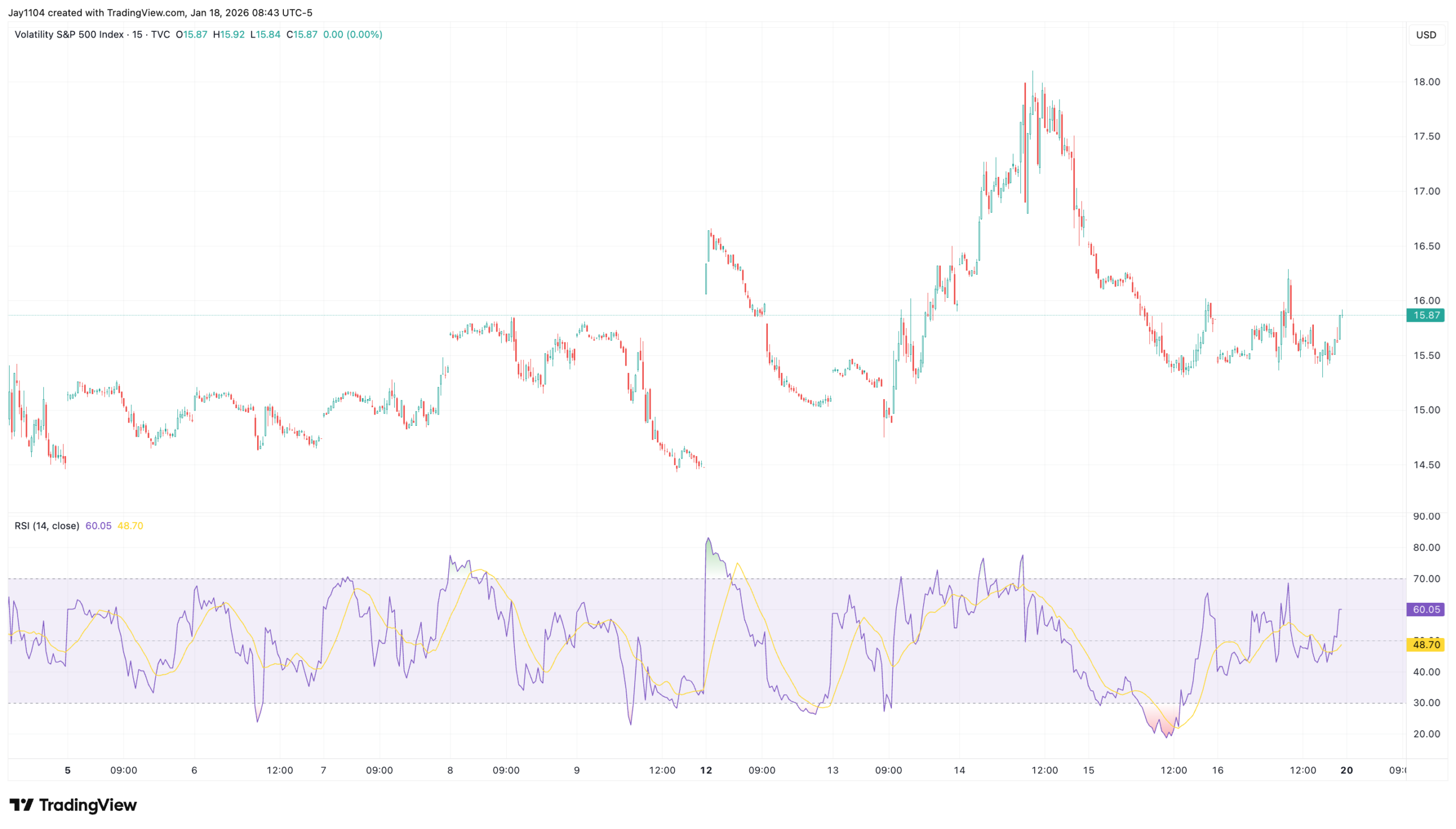
Tuesday will also be a $14 billion T-Bill Settlement date, which should add some tighter liquidity conditions into the mix as well. As a result, Tuesday could prove to be an interesting day right from the start. If overnight funding rates start to rise this week, that would increase pressure on usage of the Fed’s Standing Repo Facility, with the key level on the overnight rate being above 3.75%.

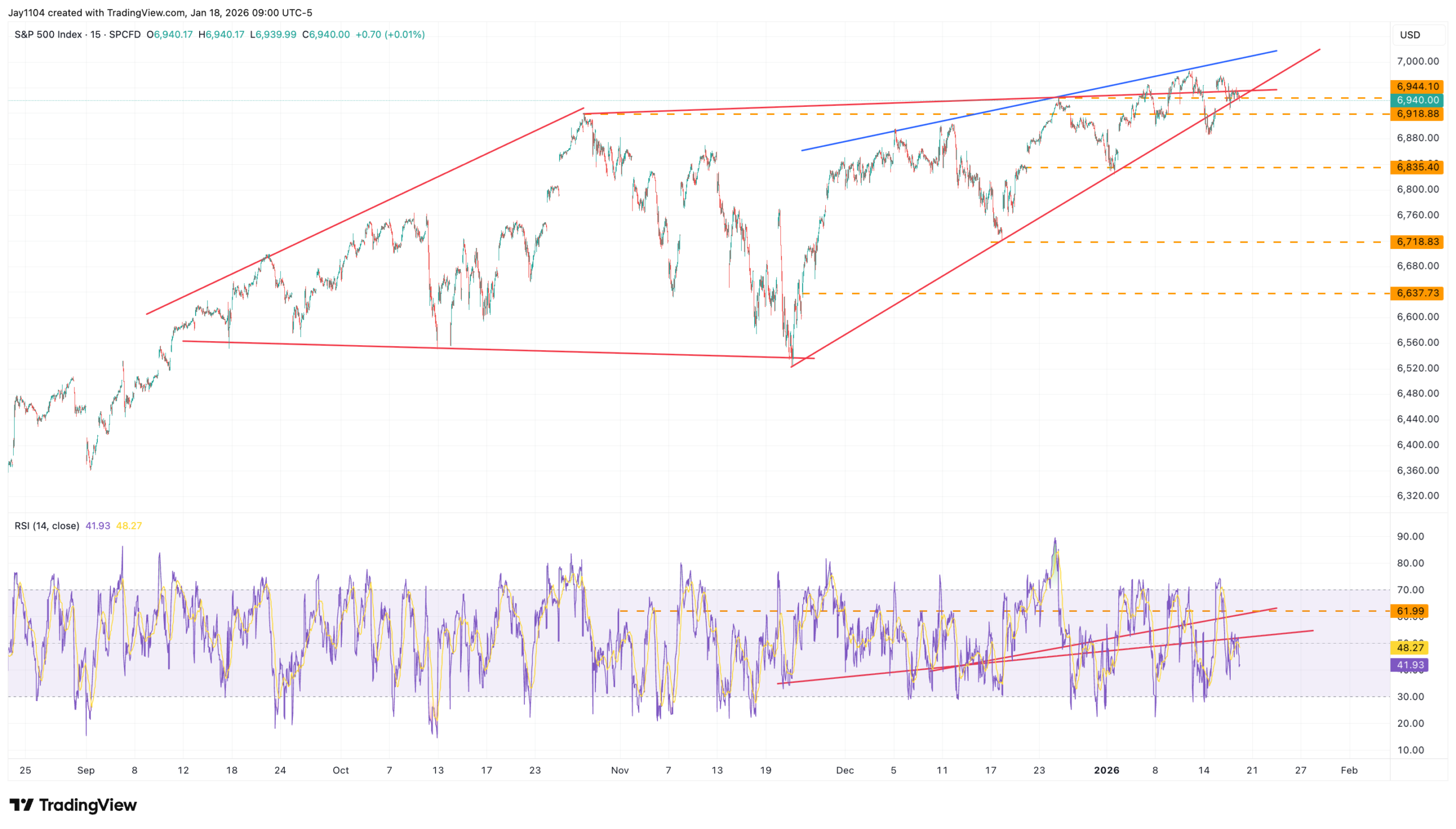
To me, the setup in the S&P 500 looks very weak. At this point, it appears the index will be in negative gamma when trading resumes on Tuesday, which could further contribute to volatility expansion. The rising wedge pattern remains firmly in place, and a break below support at 6,900 would increase the odds of a deeper pullback.
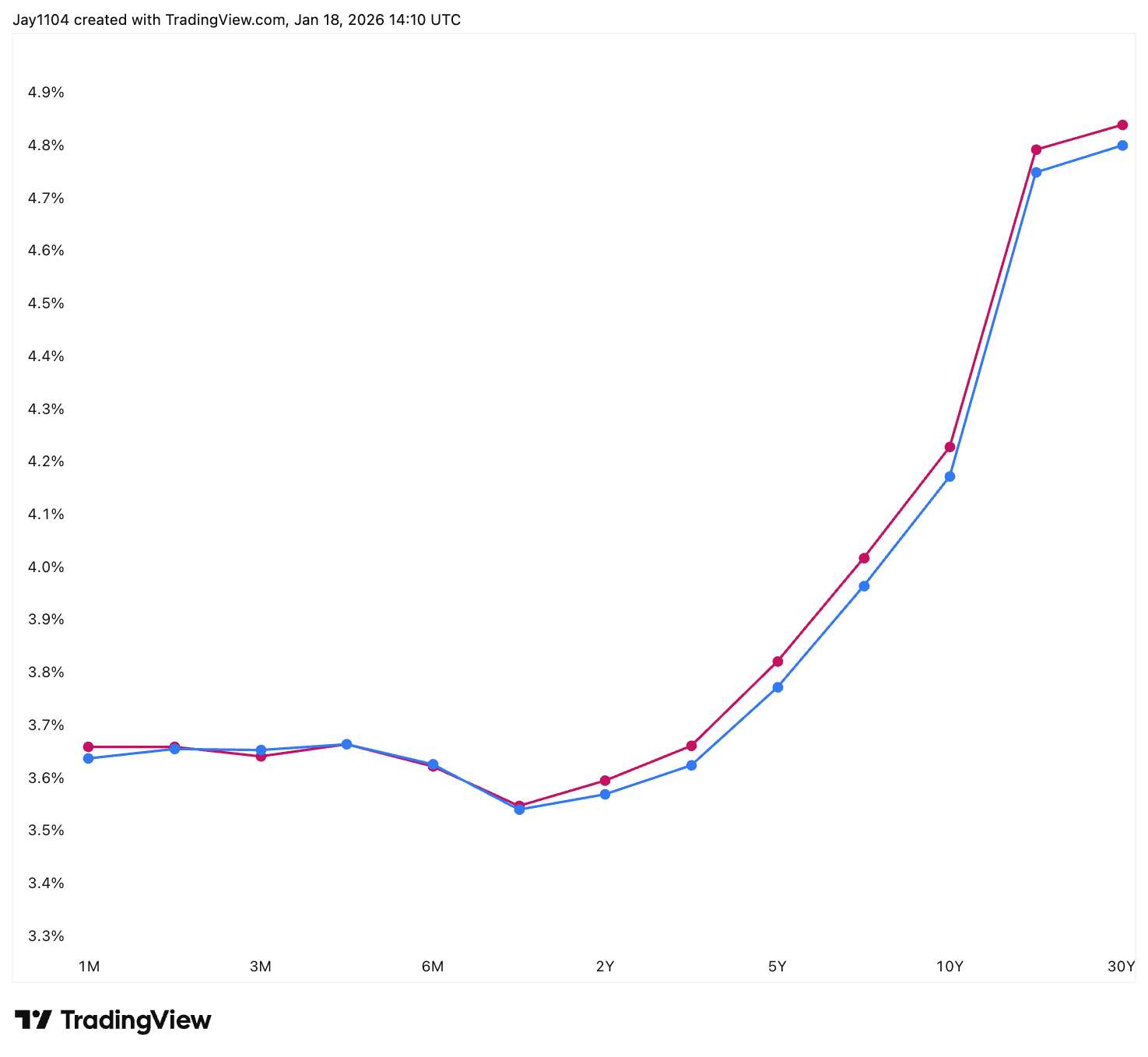
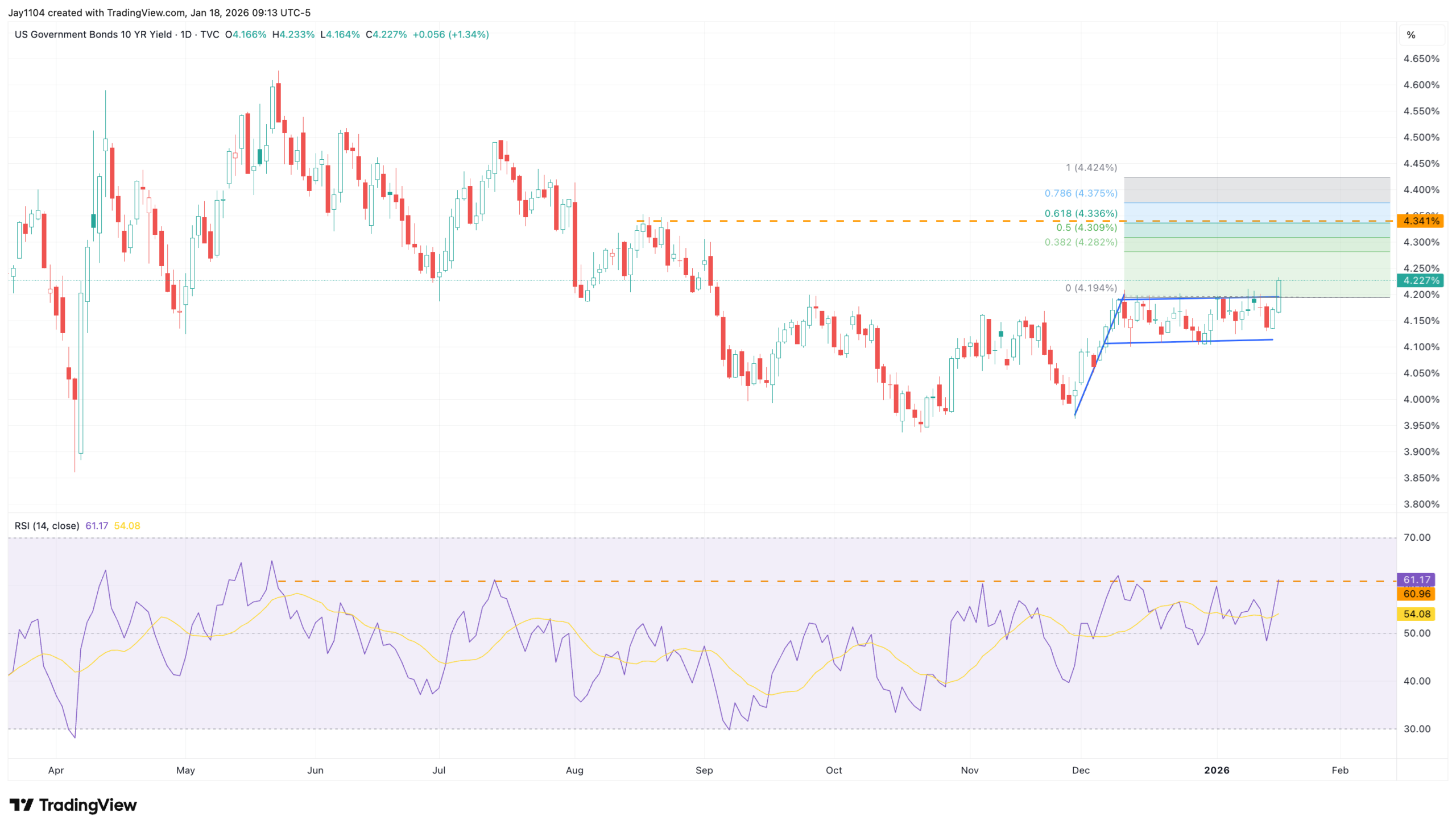
Ten-year Treasury yields broke out on Friday, and I happen to think much of that move had to do with the quarterly refunding questionnaire that was sent to primary dealers on Friday afternoon. The most pronounced steepening in the curve occurred in the “belly,” which makes sense if the Treasury is considering changing the 7-year note from a monthly new issue to a quarterly new issue with two reopenings.

To me, it sounds as though the Treasury may be preparing the market for a potential change in issuance sizes or duration at some point in the not-too-distant future, though that is admittedly speculative. Still, when you look at the rate moves, yields rose the most in the 5-year to 7-year sector, which fits with this line of thinking.
If the move had instead been driven primarily by the idea that Kevin Hassett was no longer a candidate for Fed chair, I would have expected yields to rise more sharply at the front end of the curve.
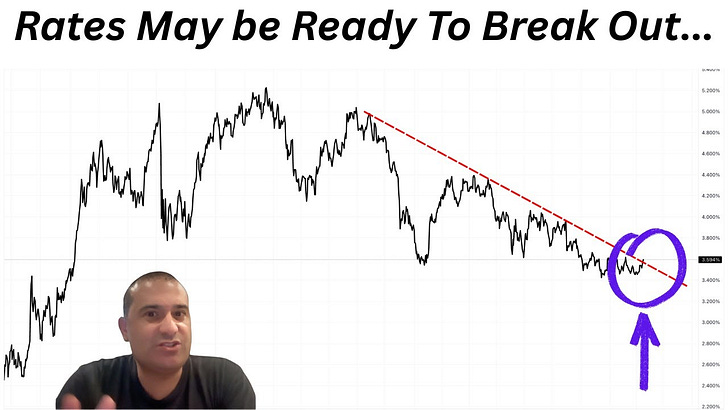
Whatever the reason, it doesn’t change the fact that the 10-year yield broke out in a meaningful way, and that a move higher may now be underway. Follow-through on Tuesday will be important, of course, but something has clearly changed.
-Mike
Glossary by ChatGPT
Belly of the Yield Curve: The intermediate-maturity segment of the yield curve, typically encompassing 3- to 7-year Treasury securities.
Implied Volatility: The market’s expectation of future price fluctuations derived from option prices.
Negative Gamma: An options positioning condition in which dealer hedging can amplify market moves rather than dampen them.
Primary Dealers: Financial institutions authorized to transact directly with the U.S. Treasury and Federal Reserve.
Rising Wedge Pattern: A technical chart formation characterized by higher highs and higher lows that often signals potential downside risk.
Steepening (Yield Curve): A move in which longer-dated interest rates rise faster than shorter-dated rates, increasing the slope of the yield curve.
T-Bill Settlement: The date on which Treasury bills are paid for and delivered, often affecting short-term liquidity conditions.
Disclosure
This report contains independent commentary to be used for informational and educational purposes only. Michael Kramer is a member and investment adviser representative with Mott Capital Management. Mr. Kramer is not affiliated with this company and does not serve on the board of any related company that issued this stock. All opinions and analyses presented by Michael Kramer in this analysis or market report are solely Michael Kramer’s views. Readers should not treat any opinion, viewpoint, or prediction expressed by Michael Kramer as a specific solicitation or recommendation to buy or sell a particular security or follow a particular strategy. Michael Kramer’s analyses are based upon information and independent research that he considers reliable, but neither Michael Kramer nor Mott Capital Management guarantees its completeness or accuracy, and it should not be relied upon as such. Michael Kramer is not under any obligation to update or correct any information presented in his analyses. Mr. Kramer’s statements, guidance, and opinions are subject to change without notice. Past performance is not indicative of future results. Neither Michael Kramer nor Mott Capital Management guarantees any specific outcome or profit. You should be aware of the real risk of loss in following any strategy or investment commentary presented in this analysis. Strategies or investments discussed may fluctuate in price or value. Investments or strategies mentioned in this analysis may not be suitable for you. This material does not consider your particular investment objectives, financial situation, or needs and is not intended as a recommendation appropriate for you. You must make an independent decision regarding investments or strategies in this analysis. Upon request, the advisor will provide a list of all recommendations made during the past twelve months. Before acting on information in this analysis, you should consider whether it is suitable for your circumstances and strongly consider seeking advice from your own financial or investment adviser to determine the suitability of any investment.