
Markets Price In Fed Rate Hikes as Treasury Yields Surge and Dollar Tests Resistance

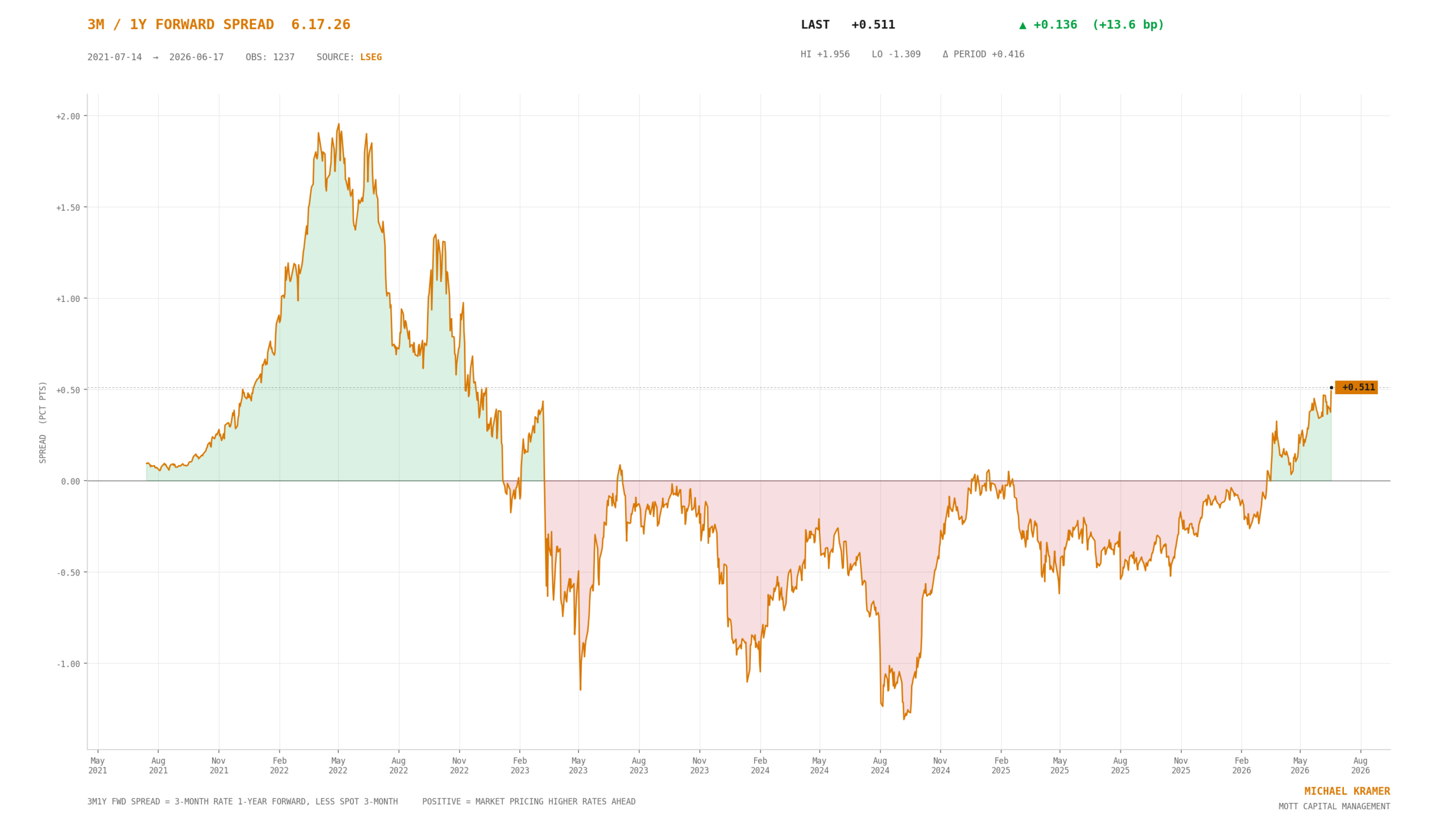
Rates surged today, with the 2-year rising by more than 13 bps to finish near 4.19%, the highest level since late 2022. Meanwhile, March 2027 Fed Fund Futures rose to 4.08%. The market has essentially priced in two rate hikes from the Fed following today’s meeting, and that is a big policy U-turn from where we stood not that long ago. The 3-month Treasury 12-month forward minus 3-Month Treasury bill spread pretty much confirms this view, rising above 50 bps.

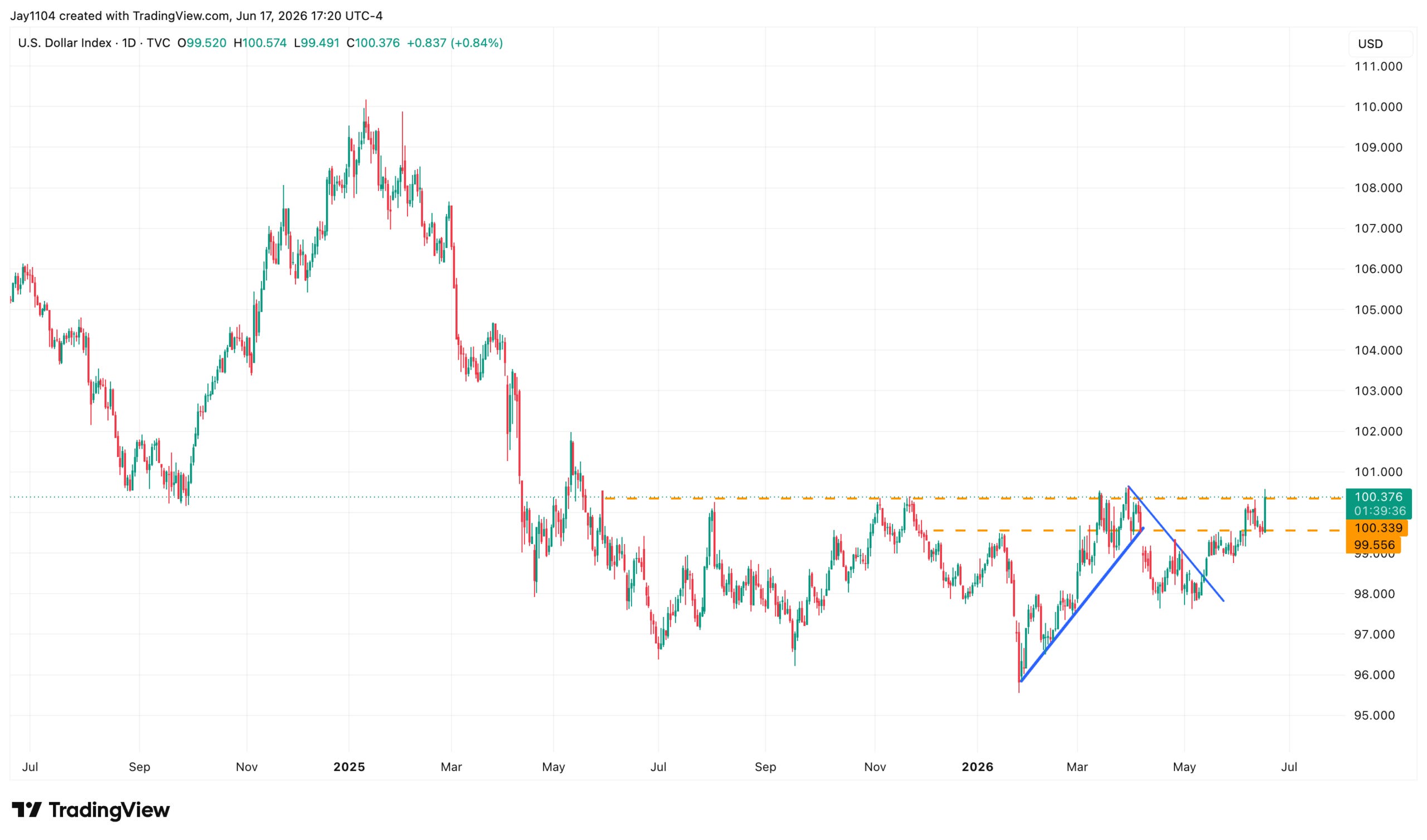
The dollar, in the meantime, sits right on resistance at 100.40, and a breakout would likely set it up to rise toward 102.
So, at least at the outset, the bond and FX markets seem to be taking the message from Warsh and the Fed seriously. The message is that no one will hold your hand, and it sounds as if the objective is to let markets trade freely without the Fed’s influence. That would be, for someone like me, really nice. It could very well be the case that macro will once again actually matter. I hope that will be the case.
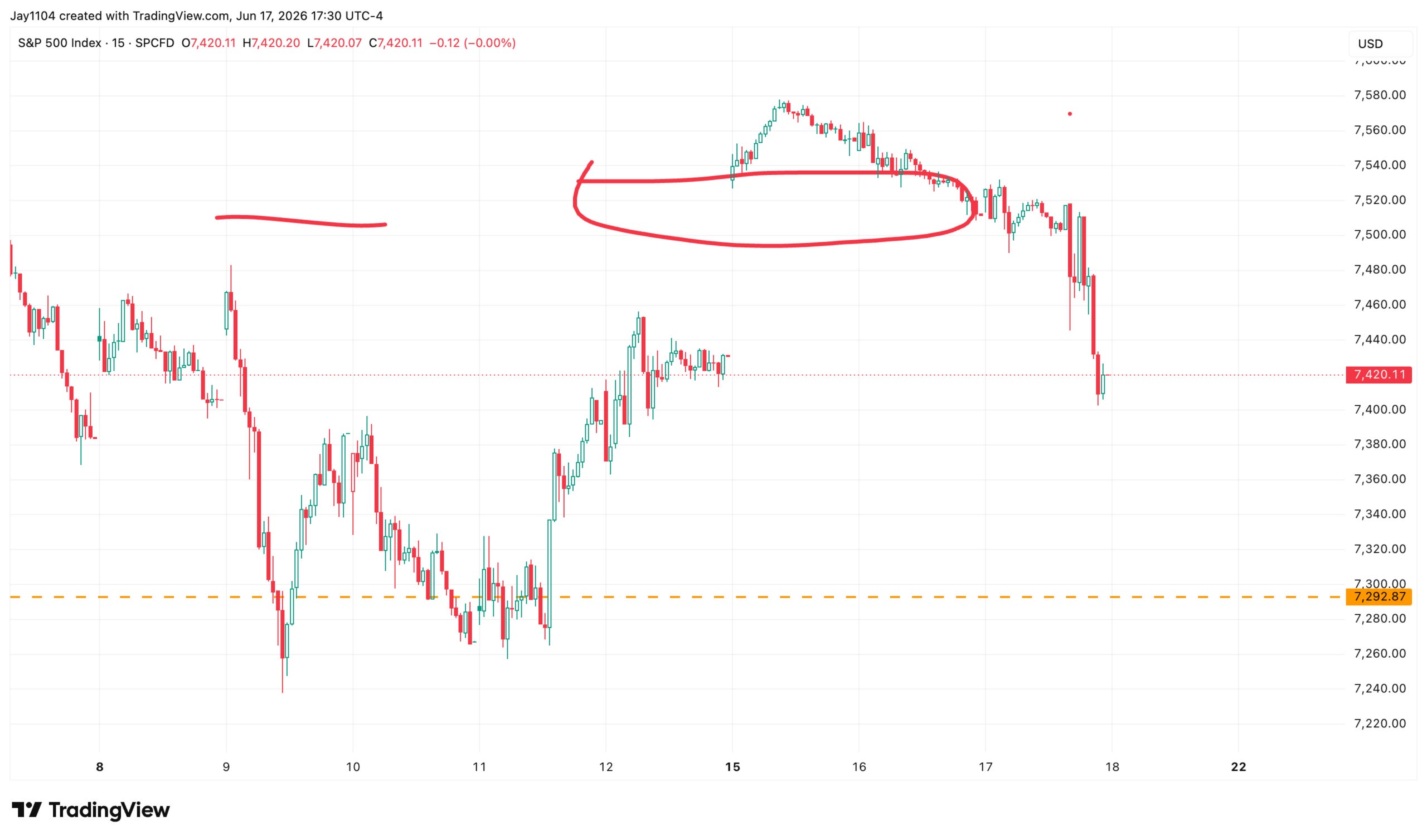
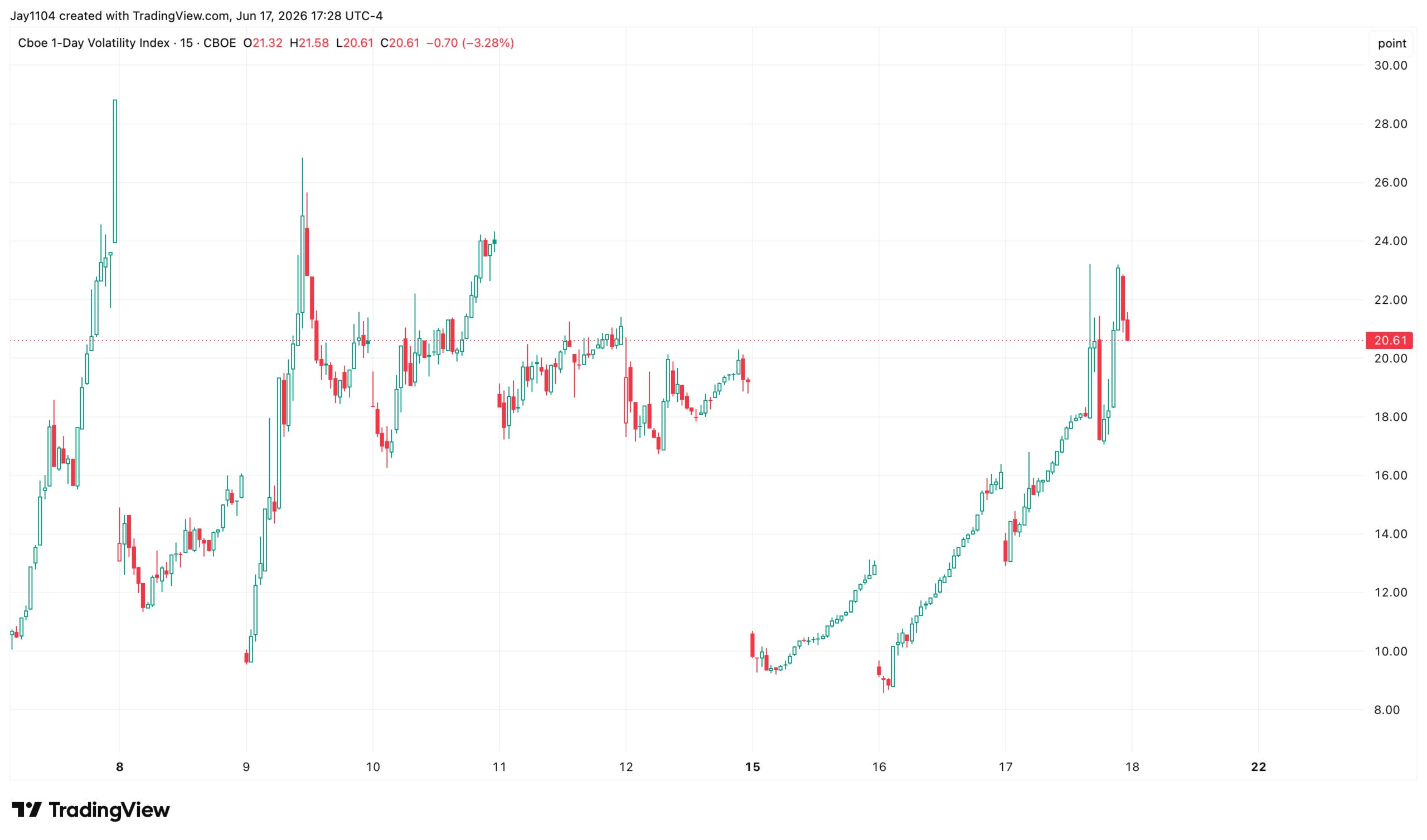
The gap from Monday on the S&P 500 is now filled. The issue for tomorrow is that it is June OPEX and a long holiday weekend, with markets closed on Friday, which could mean volatility-driven selling is in play. The VIX 1-day did rise and close over 20 today, so I wouldn’t be surprised to see it come down tomorrow and for stocks to regain some of today’s losses.
The question is what Warsh will actually do in the end and whether he is just all talk. The press conference today was revealing; there is no doubt that change is coming, and he seems rather determined to get inflation back to target. If that is real, then markets are in for a big change.
-Mike
Glossary by ChatGPT
Fed Funds Futures — Futures contracts that reflect market expectations for the future level of the Federal Reserve’s policy interest rate.
FX Markets — Foreign exchange markets where currencies are traded against one another.
Macro — A market approach focused on broad economic trends such as growth, inflation, interest rates, and monetary policy.
OPEX — Options expiration, the date when listed options contracts expire and can contribute to increased market volatility.
Policy U-turn — A significant reversal in expected or actual monetary or fiscal policy direction.
S&P 500 — A benchmark equity index tracking 500 large-cap U.S. companies.
VIX — The CBOE Volatility Index, commonly used as a measure of expected stock market volatility.
Disclosure
This report contains independent commentary to be used for informational and educational purposes only. Michael Kramer is a member and investment adviser representative with Mott Capital Management. Mr. Kramer is not affiliated with this company and does not serve on the board of any related company that issued this stock. All opinions and analyses presented by Michael Kramer in this analysis or market report are solely Michael Kramer’s views. Readers should not treat any opinion, viewpoint, or prediction expressed by Michael Kramer as a specific solicitation or recommendation to buy or sell a particular security or follow a particular strategy. Michael Kramer’s analyses are based upon information and independent research that he considers reliable, but neither Michael Kramer nor Mott Capital Management guarantees its completeness or accuracy, and it should not be relied upon as such. Michael Kramer is not under any obligation to update or correct any information presented in his analyses. Mr. Kramer’s statements, guidance, and opinions are subject to change without notice. Past performance is not indicative of future results. Neither Michael Kramer nor Mott Capital Management guarantees any specific outcome or profit. You should be aware of the real risk of loss in following any strategy or investment commentary presented in this analysis. Strategies or investments discussed may fluctuate in price or value. Investments or strategies mentioned in this analysis may not be suitable for you. This material does not consider your particular investment objectives, financial situation, or needs and is not intended as a recommendation appropriate for you. You must make an independent decision regarding investments or strategies in this analysis. Upon request, the advisor will provide a list of all recommendations made during the past twelve months. Before acting on information in this analysis, you should consider whether it is suitable for your circumstances and strongly consider seeking advice from your own financial or investment adviser to determine the suitability of any investment.