
Inflation Stays Hot as Yields Near Big Breakout


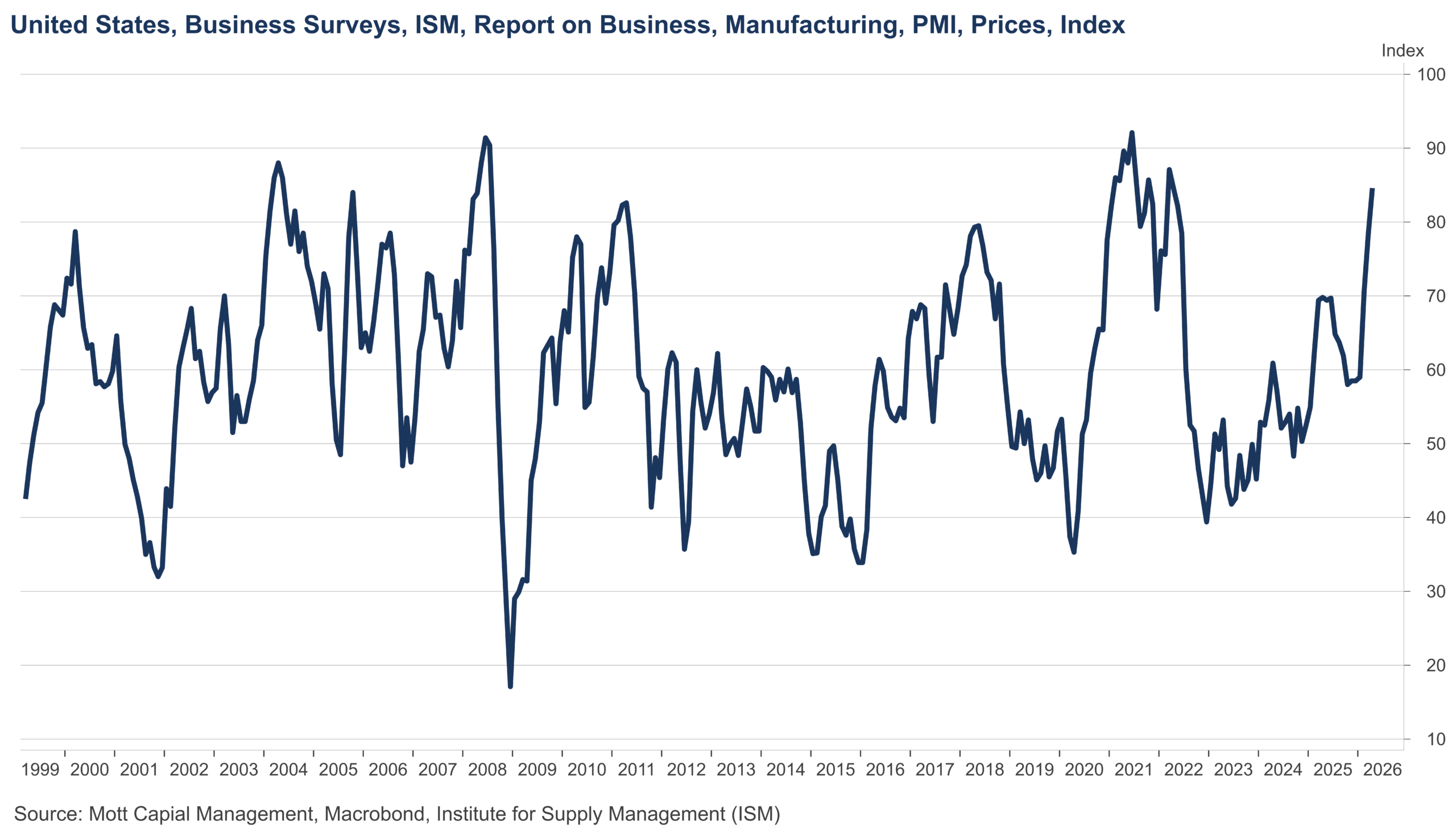
The big week of earnings has passed, and this week the economic calendar is set to come into focus, with the ISM Services report, the JOLTS report, ADP private payrolls, and the BLS jobs report. The ISM Manufacturing report came in on Friday and revealed that inflation was running very hot in April, with a prices paid index of 84.4, its highest reading since the summer of 2022.
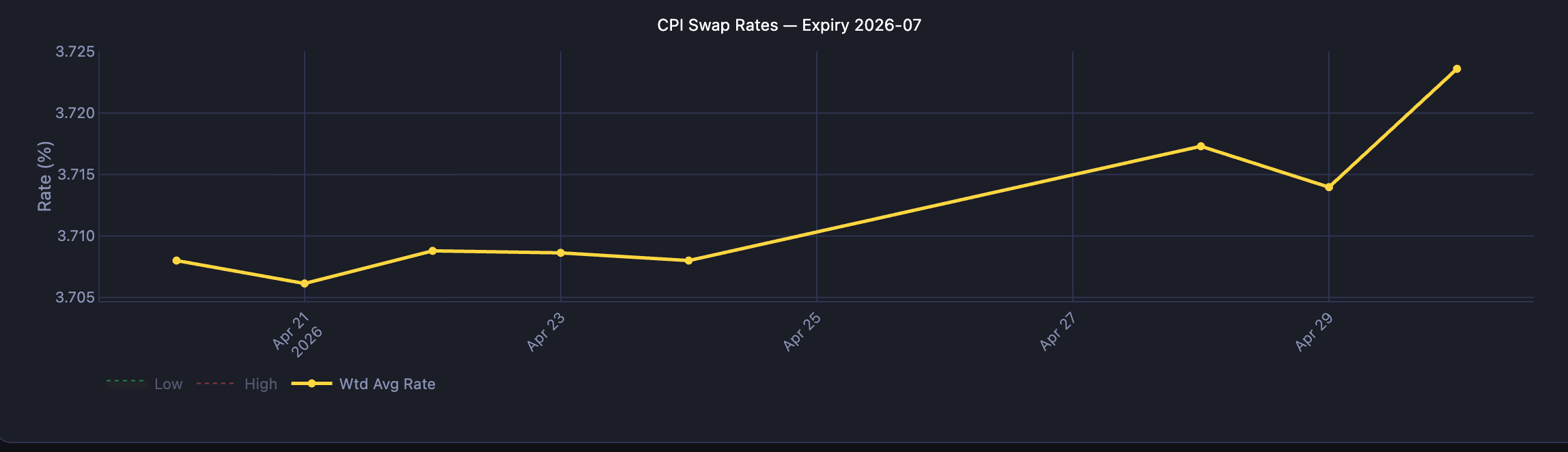
This has pushed the CPI swap rate expiring in July, which reflects April pricing, up to 3.72%, essentially in line with Kalshi’s CPI prediction of 3.7%.
So this week’s services data should help to round out and solidify whether inflation impacts are more than just manufacturing goods, and whether they are also affecting the services sector. The prices paid index in March was at 70.7, and it would not be surprising to see it rise from that level in April.
Meanwhile, the jobs report is expected to show that just 60,000 jobs were created in April, down from 178,000 in March. The unemployment rate is expected to remain unchanged at 4.3%, while wage growth is expected to accelerate to 0.3% m/m from 0.2%. Kalshi is predicting 67,000 jobs created in April and unemployment of 4.3%, so there is no reason, based on this, to expect a meaningful surprise.
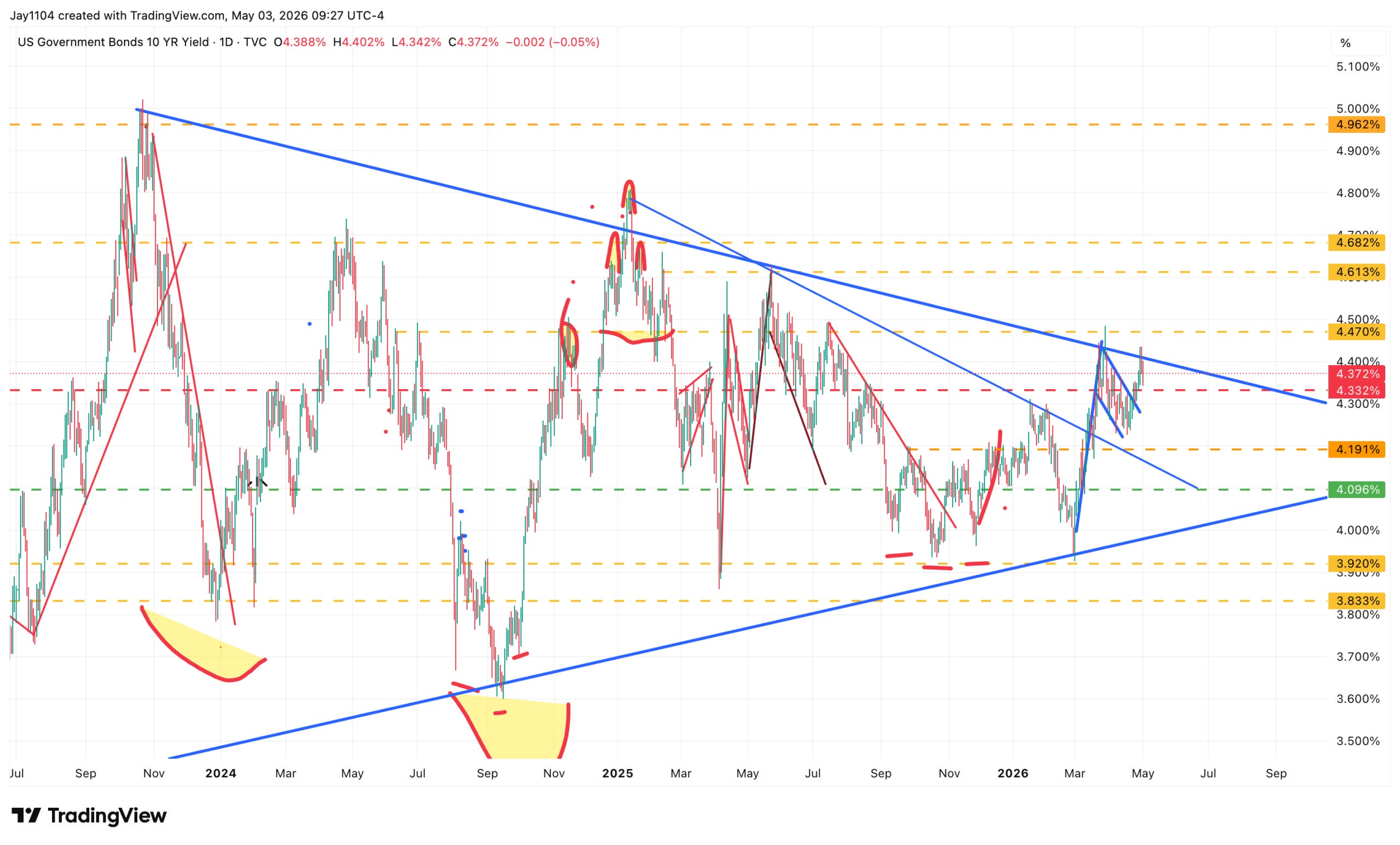
One would think that, given where interest rates have settled and the technical patterns that have formed, there is a good chance we will see follow-through from what started last week. The 10-year rate is one of those, as it breaks out of a bull flag and nears a multi-year downtrend, which could signal the start of a more explosive move to the upside.
But one thing that may be flying under the radar is the quarterly refunding announcement, which will release its estimates on Monday afternoon, around 3 p.m. ET, and the total expected issuance on Wednesday morning. Markets will obviously be paying close attention to any changes in wording around the timing of increased issuance on the coupon side of the equation. So if rates start moving around, do not be surprised.
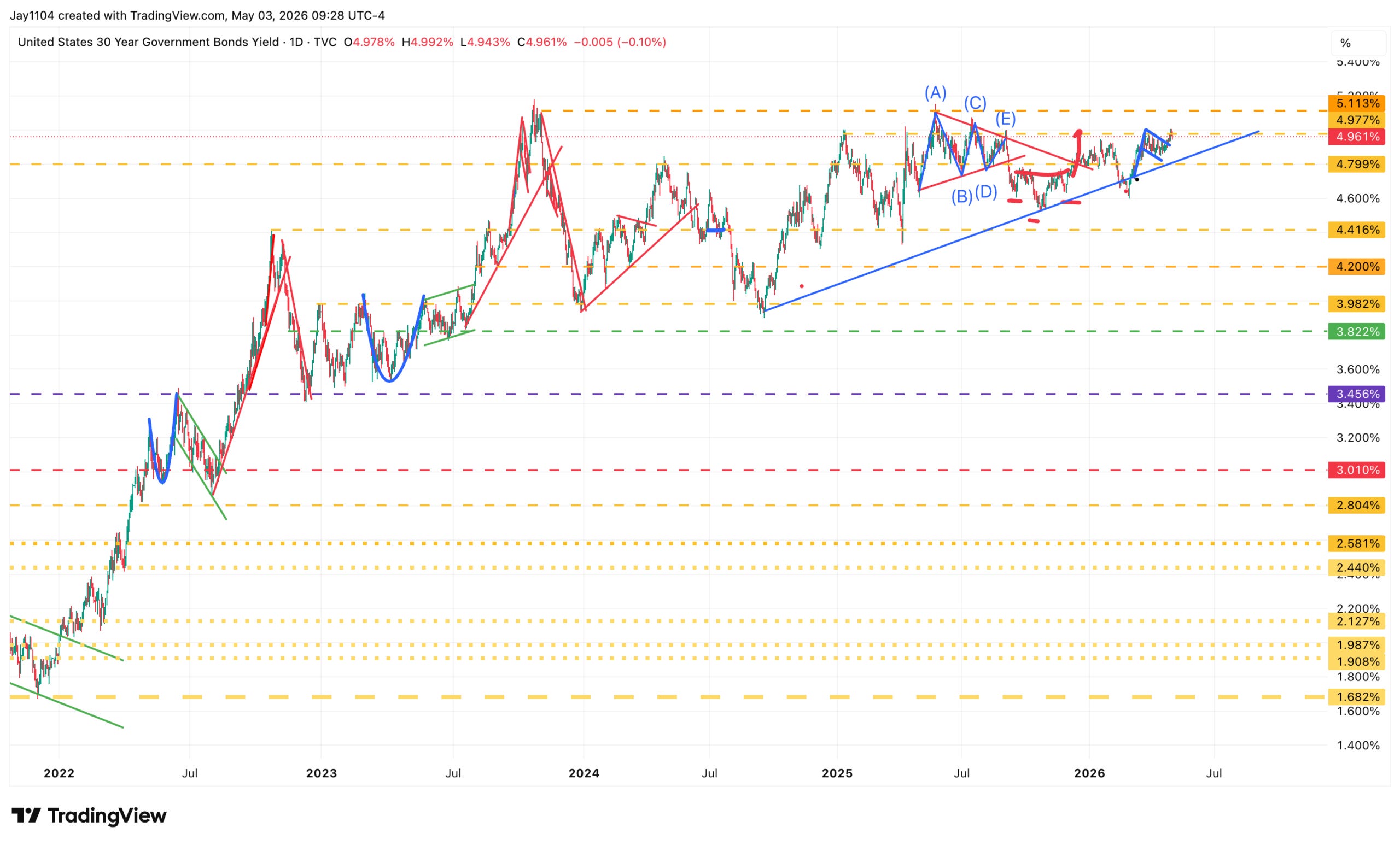
It is a similar setup in the 30-year Treasury, with what appears to be an ascending triangle pattern that has formed over a similar period, with an area of resistance around the 5% level. You can say what you want about where you think rates are heading, but the clear overriding factor is that the trend in the 30-year has been higher since July 2024.
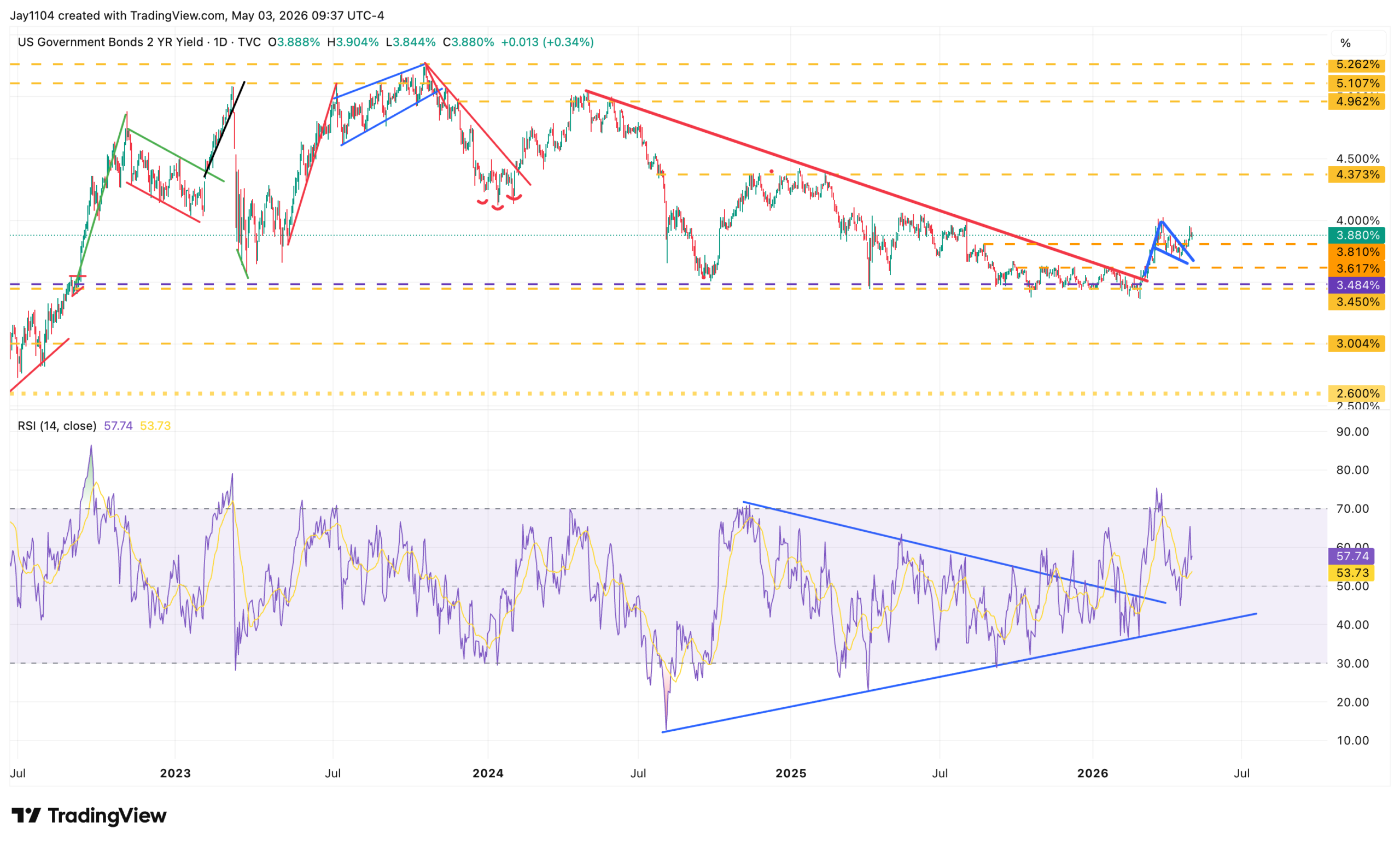
The 2-year had been in a downtrend for quite some time, but that broke some time ago, and now an RSI that has been steadily signaling a change in momentum, along with the breakout from the descending triangle, suggests the move higher in the 2-year is also picking up momentum.
That’s all for Sunday
Mike
Defined Terms and Jargon by ChatGPT
ISM (Institute for Supply Management) Reports: Economic indicators based on surveys of purchasing managers that measure business conditions in manufacturing and services sectors.
Prices Paid Index: A component of ISM reports that tracks input cost inflation faced by businesses.
CPI Swap Rate: A financial derivative that reflects market expectations for future inflation based on the Consumer Price Index.
Kalshi: A regulated exchange where traders can bet on the outcomes of economic events, such as inflation or employment figures.
JOLTS Report: Job Openings and Labor Turnover Survey, providing data on job vacancies, hires, and separations.
ADP Payrolls: A private-sector employment report often used as a preview of the official government jobs report.
BLS Jobs Report: The official U.S. employment report released by the Bureau of Labor Statistics, including nonfarm payrolls and unemployment rate.
Bull Flag Pattern: A technical chart formation indicating a potential continuation of an upward trend after a brief consolidation.
Ascending Triangle: A bullish chart pattern characterized by rising support and flat resistance, often signaling a breakout higher.
Descending Triangle: Typically a bearish pattern, but when broken to the upside, it can indicate a reversal in trend.
RSI (Relative Strength Index): A momentum indicator used to measure the speed and magnitude of price movements.
Quarterly Refunding Announcement: A U.S. Treasury update outlining borrowing needs and upcoming debt issuance plans.
Coupon Issuance: Refers to the issuance of Treasury securities that pay periodic interest.
Disclaimer
This report contains independent commentary to be used for informational and educational purposes only. Michael Kramer is a member and investment adviser representative with Mott Capital Management. Mr. Kramer is not affiliated with this company and does not serve on the board of any related company that issued this stock. All opinions and analyses presented by Michael Kramer in this analysis or market report are solely Michael Kramer’s views. Readers should not treat any opinion, viewpoint, or prediction expressed by Michael Kramer as a specific solicitation or recommendation to buy or sell a particular security or follow a particular strategy. Michael Kramer’s analyses are based upon information and independent research that he considers reliable, but neither Michael Kramer nor Mott Capital Management guarantees its completeness or accuracy, and it should not be relied upon as such. Michael Kramer is not under any obligation to update or correct any information presented in his analyses. Mr. Kramer’s statements, guidance, and opinions are subject to change without notice. Past performance is not indicative of future results. Neither Michael Kramer nor Mott Capital Management guarantees any specific outcome or profit. You should be aware of the real risk of loss in following any strategy or investment commentary presented in this analysis. Strategies or investments discussed may fluctuate in price or value. Investments or strategies mentioned in this analysis may not be suitable for you. This material does not consider your particular investment objectives, financial situation, or needs and is not intended as a recommendation appropriate for you. You must make an independent decision regarding investments or strategies in this analysis. Upon request, the advisor will provide a list of all recommendations made during the past twelve months. Before acting on information in this analysis, you should consider whether it is suitable for your circumstances and strongly consider seeking advice from your own financial or investment adviser to determine the suitability of any investment.